
Discover the best diet for thyroid health. Learn which foods support thyroid function, which to avoid, and how functional medicine testing personalizes your plan.
If you are living with fatigue, stubborn weight changes, thinning hair, brain fog, or cold hands that never seem to warm up, you have probably wondered whether food is part of the problem. Many people searching for the best diet for thyroid health have already been to their doctor, been told their labs look "normal," and left without a real plan. Others have a diagnosis like hypothyroidism or Hashimoto's thyroiditis and take medication, yet still do not feel like themselves. It is a frustrating place to be, and it is far more common than most people realize.
This guide walks through the foods that genuinely support thyroid function, the foods worth limiting, and why nutrition is only one piece of the picture. It is written from a functional and integrative medicine perspective, which looks at the thyroid in the context of your whole body rather than a single lab number. At Integrative Wellness Centers, our functional medicine team has used this root-cause approach with patients since 2012, pairing targeted nutrition with advanced lab testing so decisions are based on data, not guesswork.
If you have been adjusting your diet for months and still feel off, the missing piece is usually information about what is actually driving your symptoms. Integrative Wellness Centers works with patients in-person across Michigan and via Zoom in most US states to uncover the root causes behind thyroid struggles. You can schedule a new patient consultation to discuss your specific situation with our care team.
Your thyroid is a small gland with an enormous job. The hormones it produces regulate metabolism, energy production, body temperature, digestion, mood, and even heart rate. Making those hormones, and converting them into their active form, depends on a steady supply of specific nutrients. When those nutrients run low, or when your diet keeps inflammation and blood sugar on a rollercoaster, thyroid function can quietly suffer.
Nutrition also influences how well thyroid medication works and how you feel day to day. Harvard Health notes that a nutrient-dense diet built around vegetables, fruits, whole grains, lean protein, and healthy fats supports the metabolism and cardiovascular function that healthy thyroid activity relies on, while certain foods like large amounts of soy can interfere with thyroid hormone absorption. In other words, food will not replace appropriate care, but it can either work with your thyroid or against it.
There is no single magic food. The best diet for thyroid health is a consistent pattern: whole, minimally processed foods that deliver the raw materials your thyroid needs, keep blood sugar stable, and calm inflammation. A Mediterranean-style template of colorful vegetables, quality protein, omega-3 rich fish, olive oil, nuts, seeds, and fiber works well for most people. Within that pattern, a handful of nutrients deserve special attention.
Iodine is a structural component of the thyroid hormones T4 and T3, so your body cannot make thyroid hormone without it. According to the NIH Office of Dietary Supplements, adults need about 150 micrograms per day, which most people can reach through fish, seafood, dairy, eggs, and iodized salt. The catch is that more is not better. Excess iodine, especially from high-dose kelp or iodine supplements, can aggravate autoimmune thyroid conditions. Food-first is the safer strategy unless testing shows a true deficiency.
Selenium helps convert inactive T4 into active T3 and protects thyroid tissue from oxidative stress. Research published through the NIH shows selenium is deeply involved in thyroid hormone activity and immune regulation, and that supplementation may help some people with autoimmune thyroiditis, particularly those starting from low selenium status. One to two Brazil nuts a day, tuna, sardines, eggs, and sunflower seeds are simple food sources.
These three show up low again and again in thyroid patients. Zinc and iron are both required to produce and activate thyroid hormone, and low iron in particular can mimic or worsen hypothyroid symptoms like fatigue and hair loss. Vitamin D supports the immune balance that matters most in autoimmune thyroid disease. A naturopathic doctor or functional medicine doctor will typically test these levels rather than assume, because both deficiency and excess cause problems.
Key thyroid nutrients at a glance:
Beyond micronutrients, structure matters. Adequate protein at each meal steadies blood sugar and supports the muscle mass that keeps metabolism resilient. Fiber from vegetables, legumes, and berries feeds the gut bacteria involved in thyroid hormone conversion and helps with the constipation that often accompanies an underactive thyroid. Omega-3 fats from salmon, sardines, walnuts, and flaxseed help quiet the low-grade inflammation that so often travels with thyroid dysfunction.
No food list applies equally to everyone, and overly restrictive diets create their own problems. That said, Cleveland Clinic endocrinologists point to several categories that people with thyroid conditions should approach thoughtfully:
Here is the part most articles skip: you cannot eat your way out of a problem you have not identified. Two people with identical symptoms can need very different plans. One may have Hashimoto's, an autoimmune condition, while another has a conversion problem, a nutrient deficiency, or a gut issue affecting absorption. Feeding all of them the same "thyroid diet" misses the point.
Conventional care often screens the thyroid with TSH alone, and flags a problem only when that number leaves a wide standard range. Functional medicine works differently. It evaluates a fuller panel, typically TSH, Free T4, Free T3, Reverse T3, and thyroid antibodies, and interprets results against tighter optimal ranges where patients tend to feel well, rather than waiting for overt disease. Many people who feel terrible sit inside the standard range but outside the optimal one, which is exactly why they keep hearing "your labs are fine."
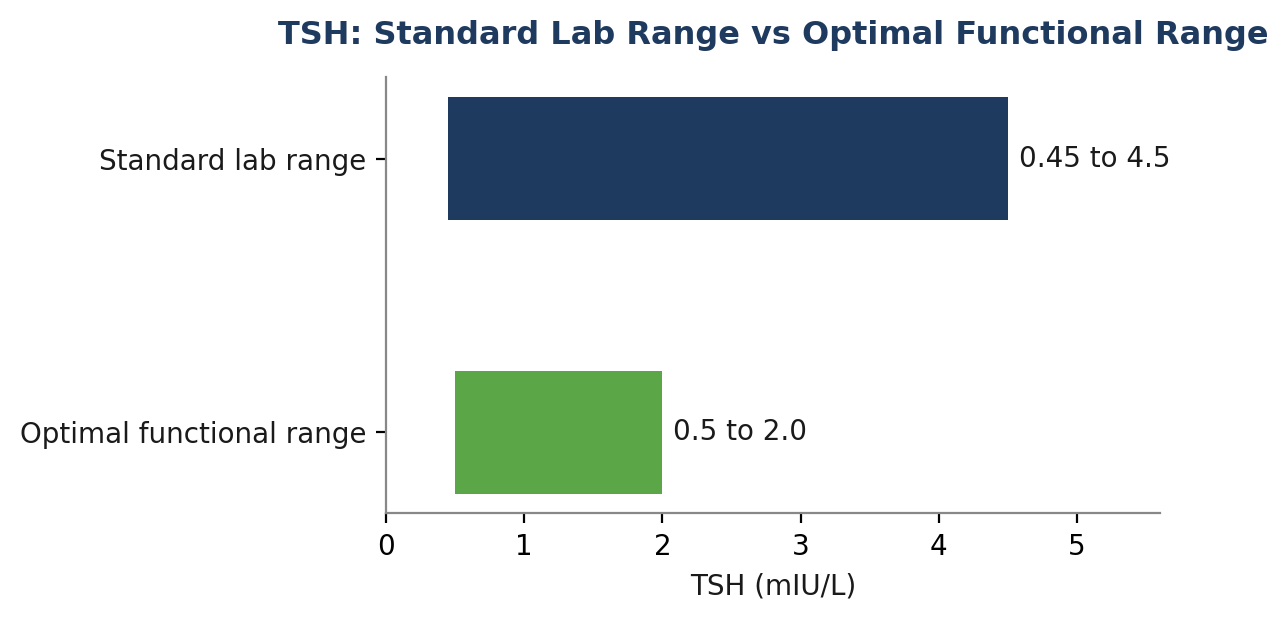
This is also where nutrition decisions become precise instead of generic. Testing shows whether selenium, iron, zinc, vitamin D, or iodine are actually low, whether antibodies suggest an autoimmune process that changes the dietary strategy, and whether gut function is undermining nutrient absorption in the first place. That "test, don't guess" philosophy is central to how our team approaches thyroid care in Michigan.
An integrative medicine practice does not hand every thyroid patient the same meal plan. Instead, the process typically unfolds in three stages.
A complete thyroid panel, key nutrient levels, blood sugar markers, and where relevant, gut and adrenal testing. The goal is a clear map of what is driving symptoms before anything is prescribed or removed from your plate.
With data in hand, a functional medicine doctor or naturopathic doctor builds a plan around your actual findings. That might mean correcting a specific deficiency through food, a structured anti-inflammatory approach for confirmed autoimmunity, blood sugar work for insulin resistance, or gut repair when absorption is the bottleneck. Sleep, stress, and movement are addressed alongside food, because chronic stress suppresses thyroid function no matter how clean the diet is.
Labs and symptoms are rechecked over a period of months, and the plan evolves with your progress. Patients often describe this as the first time anyone has tracked whether the plan is actually working rather than simply renewing a prescription.
Understanding what your thyroid actually needs starts with the right testing and a care team that takes time to listen. Integrative Wellness Centers offers holistic, root-cause care in-person across Michigan and through Zoom consultations for patients in most US states. If you are ready to stop guessing, you can book a consultation with our functional medicine team to get started.
Dietary change is not an overnight fix, and anyone promising instant results is overselling. In our experience working with patients since 2012, meaningful shifts in energy, digestion, and mental clarity often appear within the first couple of months of a well-targeted plan, while lab markers such as antibodies and nutrient levels move more gradually over a 4 to 7 month care plan. The body is designed to move toward balance when it is given the right raw materials and the obstacles are removed. Consistency beats perfection, and a plan matched to your labs beats any generic thyroid diet found online.
The best diet for thyroid health is a whole-food, anti-inflammatory eating pattern rich in iodine, selenium, zinc, iron, and vitamin D, with ultra-processed foods, excess soy near medication, and high-dose iodine supplements kept in check. Because the right plan depends on whether autoimmunity, nutrient deficiencies, or gut issues are driving your symptoms, functional medicine testing against optimal lab ranges is what turns generic advice into a plan that actually works.
These are the questions patients and readers ask most often about eating for thyroid health. The short answers below are general education, and your own plan should be built on your labs and history.
1. Is there one single best diet for thyroid health?
No single named diet fits everyone. A Mediterranean-style, whole-food pattern is the strongest general starting point, and it gets refined based on your labs, such as an autoimmune-focused approach for Hashimoto's or blood sugar work for insulin resistance.
2. Should I go gluten-free for my thyroid?
Only sometimes. Gluten removal is most relevant when Hashimoto's or celiac disease is confirmed, since the two overlap more often than chance. A supervised trial makes sense in those cases, but universal gluten avoidance is not supported for every thyroid patient.
3. Do I need to stop eating broccoli, kale, and cabbage?
For most people, no. The goitrogenic effect of cruciferous vegetables mainly applies to very large raw amounts in the setting of low iodine. Cooking deactivates most of it, and these vegetables carry real nutritional benefits worth keeping.
4. Can diet alone fix hypothyroidism or Hashimoto's?
Diet is powerful support, not a replacement for appropriate care. Nutrition can improve symptoms, nutrient status, and inflammation, but medication and medical monitoring remain important for many patients. Never stop thyroid medication without your doctor's guidance.
5. Should I take iodine supplements for my thyroid?
Not without testing. While iodine deficiency impairs thyroid function, excess iodine from supplements can worsen autoimmune thyroid disease. Food sources are the safer default, and supplementation should follow confirmed low levels.
6. How long before diet changes affect my thyroid symptoms?
Many people notice energy and digestion improving within 4 to 8 weeks of consistent change, while lab markers like thyroid antibodies typically shift over several months. A structured 4 to 7 month plan with recheck labs is a realistic frame.
7. What is the difference between seeing a functional medicine doctor and a conventional doctor for thyroid issues?
A conventional workup often centers on TSH and medication. A functional medicine or naturopathic doctor runs a fuller panel, interprets it against optimal ranges, investigates root causes like autoimmunity, nutrients, and gut health, and builds nutrition and lifestyle into the plan.
If this article sounds like the conversation you have been trying to have with a doctor, the next step is finding out whether a root-cause approach fits your situation. Integrative Wellness Centers has supported thousands of patients since 2012, in-person across Michigan and via Zoom in most US states. Request a new patient consultation to start the conversation with our care team.
Medical Disclaimer: This article is for informational and educational purposes only. It is not intended as medical advice and should not replace consultation with a qualified healthcare provider. Integrative Wellness Centers makes no claims to diagnose, treat, cure, or prevent any disease. Always consult your doctor before making changes to your health regimen or discontinuing any medication.

Take the online digestive evaluation to instantly discover what systems of your body are the cause of your health issues.
Online Digestive EvaluationTake the TestOnline Female Hormone EvaluationOnline Male Hormone Evaluation


