
Discover which foods help or harm your gut microbiome, why it matters for health, and how Functional Medicine can help.
Your gut is more than a digestive tube. Deep inside your digestive tract lives the gut microbiome, a bustling, microscopic ecosystem made up of trillions of bacteria, viruses, fungi, and microbes that outnumber your own human cells by an order of magnitude. These microscopic residents aren’t just along for the ride, they influence your digestion, immune function, inflammation levels, weight, mood, and even how you absorb nutrients.
In this guide we’ll explore what the gut microbiome is, why certain foods help or harm it, how Functional Medicine approaches gut health.
Read more about Irritable Bowel Syndrome: Symptoms, Causes & Treatments
The gut microbiome refers to all the microorganisms that live in your digestive system primarily in the colon including bacteria, viruses, fungi, and other microbes.
This microbiome acts like a hidden organ: it helps break down food your body can’t digest on its own, produces vitamins and short-chain fatty acids that nourish your gut lining, supports your immune system, and regulates inflammation. Your gut microbes also interact with your nervous system and can even influence mood and metabolism.
When the microbial balance is disrupted, a condition called dysbiosis, it may contribute to digestive issues, autoimmune conditions, inflammation, and even metabolic problems like obesity and diabetes.
This is why understanding what you eat matters so much.
Diet shapes your microbiome every day. Simply put, the foods you eat determine which bacteria thrive and which struggle. High-fiber, diverse plant foods tend to increase microbial diversity, a hallmark of a healthy microbiome, while diets high in processed fats, sugars, and low in fiber tend to reduce diversity and promote harmful bacterial growth.
Diverse fibers feed different bacteria, leading to the production of beneficial short-chain fatty acids that help maintain the gut barrier, reduce inflammation, and support metabolic health.

Here’s a deep dive into specific food types that nourish your gut microbes and promote a balanced microbiome.
Whole grains, beans, legumes, fruits, and vegetables are prebiotic-rich, meaning they feed the beneficial bacteria in your gut. Prebiotics like inulin, resistant starch, and soluble fiber are the building blocks of microbial health. Eating a variety of plant fibers boosts diversity and microbial resilience.
Examples:
These feed microbes that ferment fiber into short-chain fatty acids, which help maintain gut barrier integrity and reduce inflammation.
Probiotics are live bacteria that can help balance the microbes in your gut. Foods rich in probiotics include:
These foods introduce beneficial bacteria and support microbial diversity. Note that adding fermented foods gradually is best to avoid digestive discomfort.
Polyphenols are plant compounds with antioxidant properties that also feed beneficial gut bacteria. Colorful fruits and vegetables, green tea, nuts, and seeds are excellent sources. For example:
These compounds help beneficial microbes flourish while reducing oxidative stress in the gut.
Fatty fish like salmon, sardines, and mackerel are rich in omega-3 fatty acids that have anti-inflammatory effects and may support a healthier microbiome composition. These fats help maintain gut lining integrity and support immune regulation.
The more diverse your diet, the more diverse your gut microbiome. Microbes are like picky eaters, feeding them lots of different foods encourages a richer ecosystem. Research shows people who eat at least 30 different plant foods weekly tend to have more diverse and resilient gut microbiomes.
Read more Gut Health & Mental Health: What You Need to Know
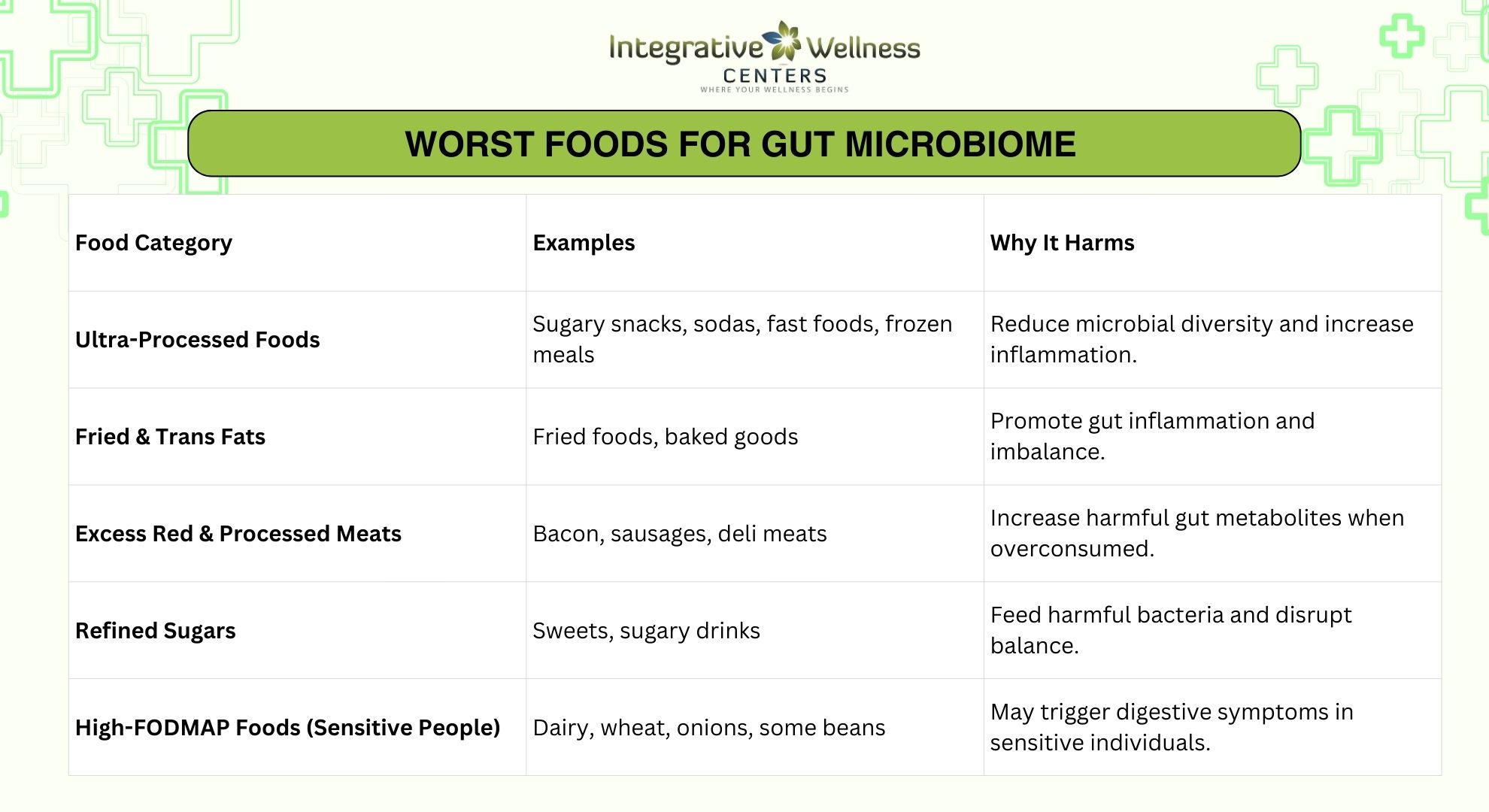
Some foods can harm microbial diversity, promote inflammation, or feed the wrong microbes.
Ultra-processed foods, common in Western diets, are low in fiber, high in additives, emulsifiers, sugar, and unhealthy fats. These properties have been linked to reduced microbial diversity, increased gut permeability, and chronic inflammation.
Examples:
These foods often displace whole, fiber-rich foods that beneficial microbes need.
Foods high in trans fats, often found in deep fried foods and baked goods, are associated with intestinal inflammation and less diverse microbiomes.
Red unprocessed meats in moderation can fit a healthy diet, but excessive intake, especially when combined with low fiber, may increase harmful bacterial metabolites and inflammation. Some studies link meat-derived gut metabolites with cardiometabolic risk.
Sugars and sugary drinks feed microbes that thrive on simple sugars, often at the cost of beneficial species, leading to imbalances and inflammation.
For people with irritable bowel syndrome or sensitivities, lactose and high-FODMAP foods (like certain beans, onions, and wheat products) can trigger symptoms. These foods aren’t “bad”, they just require tailored approaches in individuals with sensitivities. Personalization is key.
At Integrative Wellness Centers, the best functional medicine in Michigan, we approach gut health holistically and scientifically. Functional Medicine treats the root causes of imbalance, not just symptoms. For gut issues, we integrate:
Gut dysfunction is often interlinked with hormonal, metabolic, and immune systems. This makes an integrative approach, rather than a one-size-fits-all prescription far more effective.
1. What exactly is the gut microbiome?
It’s the entire community of microorganisms living in your digestive tract that influence digestion, immune function, mood, and metabolism.
2. How does diet shape the gut microbiome?
Diet feeds microbes directly — fibers nourish beneficial species, while sugars and ultra-processed foods can reduce diversity.
3. Can probiotics improve gut health?
Yes, probiotic foods (like yogurt and kefir) introduce beneficial bacteria, but results vary and should be part of a broader diet strategy.
4. Are supplements necessary for gut health?
Not always, many benefits come from whole foods. Supplements may help certain conditions or post-antibiotic recovery, but aren’t a quick fix.
5. Do fermented foods really help the microbiome?
Yes, they contain live bacteria that can support gut balance. Examples include sauerkraut, kimchi, and kefir.
6. How long does it take to change your gut microbiome?
Microbiome changes can start within days of changing your diet, but long-term diversity improvements take weeks to months.
7. Is fiber the most important nutrient for gut health?
Fiber plays a central role in feeding beneficial microbes and supporting short-chain fatty acid production.
8. Can gut health affect mood?
Yes, the gut-brain axis means gut microbes influence neurotransmitters and mood regulation.
9. Are gut microbiome tests worth it?
Many commercial tests vary widely and may not be clinically useful without professional interpretation. With Integrative Wellness Centers, you can have a test and professional intepretation from our Functional Medicine Doctor. Book a consultation now!
10. What foods should I avoid for a healthier gut?
Ultra-processed foods, sugary drinks, fried foods, and excessive refined fats are best minimized.

Take the online digestive evaluation to instantly discover what systems of your body are the cause of your health issues.
Online Digestive EvaluationTake the TestOnline Female Hormone EvaluationOnline Male Hormone Evaluation


