
Learn about common nutrient deficiencies, their signs, food sources, and functional medicine solutions to support whole-body health.
Most of us think of food simply as fuel, a plate of pizza, a smoothie, or coffee on the run. But beneath every bite lies a complex choreography of vitamins, minerals, electrolytes, and phytonutrients that keep our cells humming.
When this microscopic ecosystem falters, nutrient deficiencies can silently erode health, presenting as fatigue, digestive trouble, hormonal imbalance, immune disruption, and more.
At Integrative Wellness Centers in Michigan, we believe in uncovering the why behind symptoms, not just treating them. This article explores nutrient deficiencies from science to real-world relevance, and offers practical food-based and Functional Medicine solutions rooted in evidence and individualized care.
“Nutrient deficiency” means your body isn’t getting enough of a vital vitamin, mineral, or micronutrient to carry out essential biochemical processes. Unlike macronutrients (proteins, fats, carbs), these are required in smaller quantities, yet their absence can trigger far-reaching effects.
Nutrient deficiencies can stem from an insufficient dietary intake, poor absorption (from digestive disorders), increased needs (e.g., pregnancy, inflammation), or metabolic imbalances that disrupt utilization.
The World Health Organization classifies lack of micronutrients like iron, folate, vitamin B12, and vitamin A as global public health concerns in certain populations
Every single cell in your body depends on micronutrients:
Without adequate micronutrients, your body may initially compensate, but over time, wear appears as symptoms: chronic fatigue, brain fog, brittle nails, hair loss, PMS or irregular cycles, digestive issues, or slow wound healing.
Nutrient deficiencies are not always obvious, and symptoms can sneak up gradually, often overlapping with other health conditions.
Recognizing when your body is signaling a shortage is a pivotal step toward wellness. Signs can vary widely depending on which nutrient is low, but there are common physical and mental clues:
According to the MSD Manual, specific nutrient shortages are associated with particular symptom patterns, for example, vitamin D deficiency often leads to bone thinning and muscle weakness, while low B12 can cause numbness and confusion.
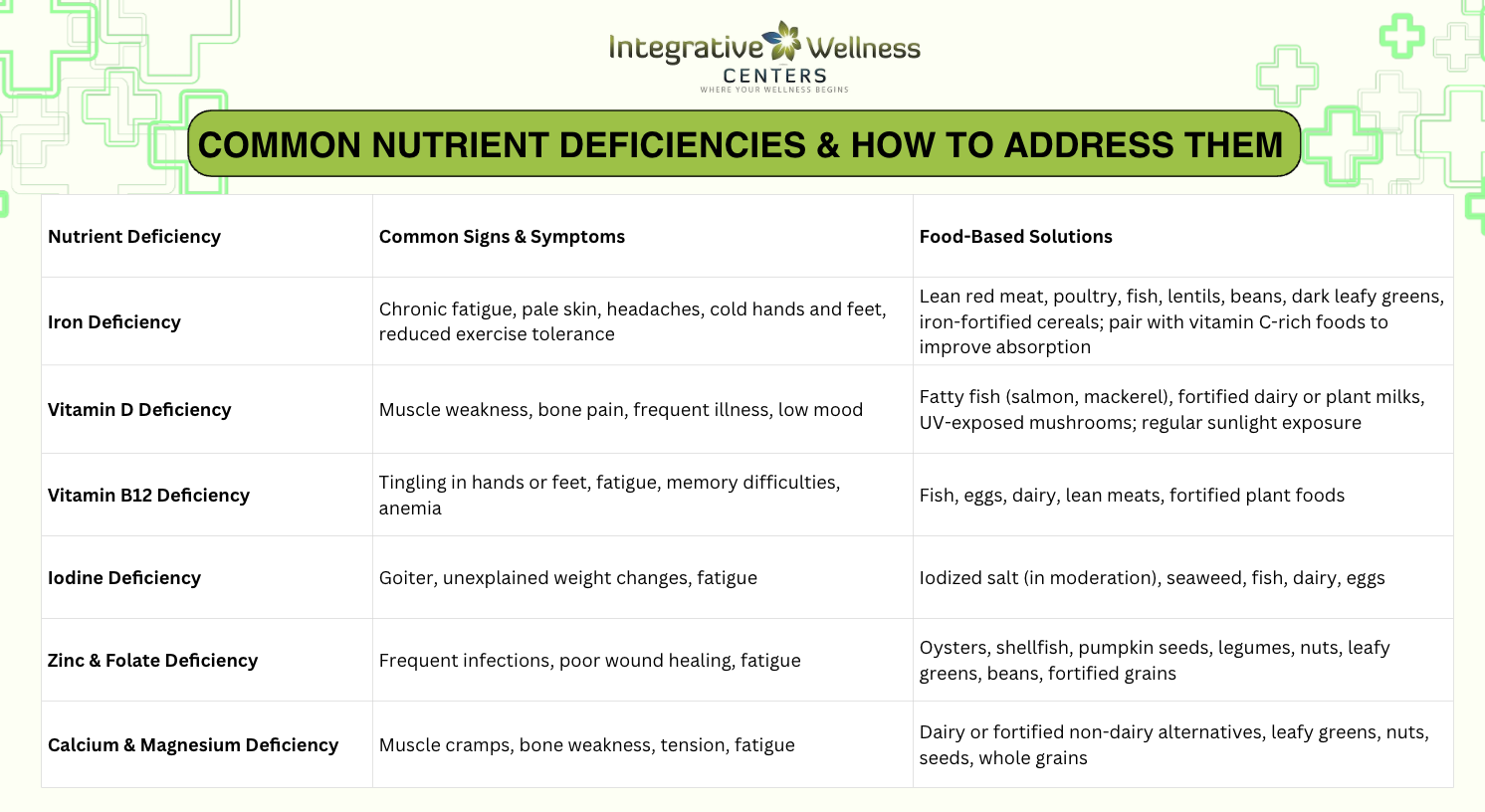
Many nutrient deficiencies are surprisingly prevalent even in developed countries because modern diets often lack diversity and nutrient density. Research shows that certain micronutrients like iron, vitamin D, iodine, zinc, folate, and B12 are frequently below optimal levels in broad populations, contributing to fatigue, immune issues, metabolic imbalance, and more.
Iron helps your body carry oxygen to tissues via hemoglobin. Iron deficiency is one of the most common nutrient shortfalls Worldwide, especially among women of reproductive age, children, and people eating plant-based diets.
Signs/Symptoms: Chronic fatigue, pale skin, headaches, cold hands/feet, and reduced tolerance for exercise are classic clues.
Solutions: A food-first approach includes lean red meat, poultry, fish, lentils, beans, dark leafy greens, and iron-fortified cereals. Vitamin C-rich foods like citrus fruits or bell peppers eaten with iron-rich meals can boost absorption. For people with diagnosed iron deficiency anemia, targeted supplementation under clinical supervision can be life-changing.
Vitamin D acts like a hormone and is essential for bone health, immune function, and muscle strength. Many people don’t get sufficient sun exposure or dietary intake, leading to widespread low levels.
Signs/Symptoms: Weak muscles, bone pain, frequent illness, and low mood can be subtle but significant indicators.
Solutions: Sunlight exposure, about 10–30 minutes several times per week depending on skin tone and season helps the body make vitamin D naturally. Oily fish like salmon and mackerel, fortified dairy or plant milks, and UV-exposed mushrooms are excellent food sources. In higher-risk individuals, clinically guided supplementation may be recommended.
Vitamin B12 is critical for nerve function and red blood cell formation. Because it’s found mainly in animal foods, people following vegetarian or vegan diets and older adults who absorb nutrients less efficiently are especially at risk.
Signs/Symptoms: Tingling in hands or feet, memory difficulties, fatigue, and anemia may develop over time.
Solutions: Incorporate animal-derived proteins like fish, eggs, dairy, and lean meats. Fortified plant foods can help vegans, but blood testing and individualized supplementation are often essential to restore healthy levels.
Iodine is necessary for thyroid hormone production, which regulates metabolism. Around a third of the global population experiences some degree of iodine insufficiency.
Signs/Symptoms: Goiter (enlarged thyroid), unexplained weight changes, and fatigue.
Solutions:Use iodized salt in moderation, eat seafood like seaweed and fish, and include dairy or eggs in your diet. For people with thyroid concerns, clinical evaluation can determine whether additional supplementation is needed.
Research indicates that zinc and folate are also commonly inadequate in many diets globally. These nutrients influence immune function, DNA synthesis, and cellular repair.
Solutions: Zinc-rich foods include oysters and shellfish, pumpkin seeds, legumes, and nuts. Folate is abundant in dark leafy greens, beans, and fortified grains. Tailoring food choices and targeted supplementation based on lab results can optimize these micronutrient levels.
Calcium supports bone strength and muscle signaling, while magnesium plays roles in energy production, nerve function, and relaxation pathways. Many people fall short of recommended intake.
Solutions: Dairy or fortified non-dairy alternatives, leafy greens, nuts, and seeds help increase intake. Pair calcium-rich meals with vitamin D for better absorption. For magnesium, foods like almonds, spinach, and whole grains are excellent choices.
Functional Medicine is not a one-size-fits-all model. It looks at biochemistry, genetics, gut health, lifestyle, and environmental exposures to craft tailored nutrition and lifestyle strategies.
Finding the root cause: Nutrient deficiencies often result from poor digestion, low absorption, chronic inflammation, hormonal shifts, medication use, or increased nutrient demands. Functional Medicine looks beyond diet alone to uncover these contributing factors.
Personalized testing: Targeted lab testing is used to measure nutrient levels and related markers. This allows for early detection and ensures recommendations are based on individual needs rather than guesswork.
Food-first nutrition: Whole foods are the foundation of correction. Personalized nutrition plans focus on nutrient-dense foods while also improving absorption and metabolic balance.
Targeted supplementation: When needed, supplements are used strategically and in appropriate forms and doses. This helps restore levels safely without unnecessary or excessive supplementation.
Whole-body support: Addressing gut health, hormone balance, immune function, and stress improves the body’s ability to absorb and use nutrients effectively.
You don’t have to interpret symptoms alone. Schedule an appointment with Integrative Wellness Centers for a personalized nutrient assessment and healing plan.
Read more Top 3 Signs You May Have A Thyroid Problem
Nutrient health plays a vital role in energy, immunity, hormone balance, and overall well-being. When key nutrients are low, symptoms often develop gradually and can be mistaken for stress or everyday fatigue. Identifying nutrient imbalances early helps prevent long-term issues and supports how your body functions at a cellular level.
At Integrative Wellness Centers, we take a Functional Medicine approach that looks beyond symptoms to uncover the root causes of nutrient deficiencies. Through personalized testing, nutrition strategies, and whole-body support, we help restore balance and promote lasting wellness. Schedule an appointment today to take a proactive step toward better health.
1. What exactly causes nutrient deficiencies?
Nutrient deficiencies may arise from poor dietary intake, restricted diets, digestive malabsorption, chronic inflammation, increased physiological demands (growth, pregnancy), medications, or lifestyle factors like low sun exposure.
2. Can I have nutrient deficiencies even if I eat “healthy”?
Yes. Absorption issues, stress, gut imbalance, chronic illness, and medications can all impede micronutrient levels despite a nutrient-dense diet.
3. What tests diagnose nutrient deficiencies?
Blood panels can measure levels of vitamins D, B12, folate, iron, magnesium, and more. Functional Medicine practitioners may add specialized markers for comprehensive insight.
4. Are nutrient deficiencies reversible?
Most are, with dietary changes, targeted supplementation, and addressing underlying causes.
5. How long does it take to correct a deficiency?
It varies by nutrient and cause, anywhere from weeks to months. Ongoing support and monitoring are key.
6. Can supplements replace food?
Supplements can fill gaps but should complement whole food intake and individualized clinical guidance.
7. Is it possible to overdose on nutrients?
Yes. Fat-soluble vitamins (A, D, E, K) and certain minerals can accumulate if taken in excess without need.
8. What role does gut health play in nutrient status?
Crucial, the gut is where absorption happens. Addressing dysbiosis, inflammation, or enzyme deficiency can significantly improve nutrient uptake.
9. How is Functional Medicine different from standard care?
Functional Medicine seeks root causes and personal metabolic context rather than solely treating symptoms.

Take the online digestive evaluation to instantly discover what systems of your body are the cause of your health issues.
Online Digestive EvaluationTake the TestOnline Female Hormone EvaluationOnline Male Hormone Evaluation


