
Learn what a functional medicine nutritionist does, how lab-guided nutrition addresses root causes, and how to work with one in Michigan or via Zoom in most US states.
If you have been eating "healthy" for months and still feel exhausted, bloated, foggy, or stuck at the same weight, you are not imagining things. Many people follow reasonable diet advice, get told their labs look normal, and are left wondering why nothing changes. Generic meal plans rarely account for the nutrient deficiencies, blood sugar swings, gut imbalances, and hormonal shifts that quietly drive those symptoms. This is exactly the gap a functional medicine nutritionist is trained to close. Instead of handing you another one-size-fits-all food list, they investigate why your body is responding the way it is, then build nutrition strategies around your actual biochemistry.
In this guide, we will walk through what a functional medicine nutritionist does, how their approach differs from conventional nutrition counseling, what they look for, and how nutrition work fits alongside care from a functional medicine doctor or naturopathic doctor. At Integrative Wellness Centers of Michigan, nutrition has been a core pillar of our root-cause approach since 2012, always guided by advanced lab testing rather than guesswork.
If you have been searching for answers about your diet and symptoms and feel like conventional advice has not addressed the root cause, you are not alone. Integrative Wellness Centers works with patients in-person across Michigan and via Zoom in most US states to identify what is actually driving these issues. You can schedule a new patient consultation to discuss your specific situation with our care team.
Food is not a side note in chronic health issues. It is one of the main levers. Research published in Nutrition for the Prevention of Chronic Diseases notes that chronic non-communicable diseases are the leading causes of illness and death in the United States, and that they are attributable largely to poor nutrition and suboptimal lifestyle behaviors. In other words, what you eat shapes your risk for fatigue, diabetes, hormonal issues, digestive problems, and more.
Despite that, most people never receive personalized nutrition guidance. A typical primary care visit lasts minutes, and diet advice is often limited to "eat better and exercise." Patients with thyroid conditions, autoimmune issues, or persistent fatigue are frequently sent home with a prescription and no conversation about the nutritional factors feeding their symptoms. A functional medicine nutritionist exists to fill that space with structured, evidence-informed, personalized nutrition care.
A functional medicine nutritionist is a nutrition professional who applies functional medicine principles, meaning they use food, targeted supplementation, and lifestyle changes to address the root causes of symptoms rather than just managing them. The Institute for Functional Medicine describes functional nutrition as a systems-based and personalized approach that helps reveal nutritional imbalances and possible root causes, triggers, and perpetuators of chronic conditions.
In practical terms, working with a functional medicine nutritionist usually involves:
One point worth knowing: credentials in this field vary. As the Cleveland Clinic explains, "dietitian" is a protected title requiring formal education and licensure, while "nutritionist" on its own is not regulated in many states. That is why it matters to work with a clinic where nutrition guidance is delivered within a medical framework, supervised by trained clinicians, and grounded in objective testing.
Standard nutrition counseling is built for the average person, not for you. General guidelines like "eat more vegetables and less sugar" are sound public health advice, and an umbrella review of prospective cohort studies confirms that healthy dietary patterns reduce the risk of type 2 diabetes and heart disease. But population-level advice cannot tell you why you specifically feel unwell while already eating reasonably well.
The other gap is testing. Conventional care typically checks a small panel of markers and flags results only when they fall outside broad statistical ranges. A ferritin level, vitamin D level, or thyroid marker can sit at the low end of "normal" while still being far from optimal for how you feel and function. Symptoms then get labeled as stress, aging, or anxiety because the numbers technically pass. Functional medicine nutrition uses wider testing and optimal ranges, so patterns that conventional review misses become visible and actionable.
Here is how the two approaches compare side by side:
Rather than starting with a diet, a functional medicine nutritionist starts with questions. Which systems are struggling, and what is feeding that struggle? Several root-cause areas come up again and again.
Low iron, vitamin D, B12, magnesium, or zinc can drive fatigue, brain fog, hair loss, low mood, and poor immune function. These deficiencies often hide inside "normal" lab results when only standard ranges are used, which is why optimal-range interpretation matters so much.
Energy crashes, sugar cravings, stubborn weight, and afternoon brain fog frequently trace back to blood sugar dysregulation and early insulin resistance. Markers like fasting insulin and hemoglobin A1c can reveal problems years before a diabetes diagnosis, and nutrition is the first-line tool for turning that trajectory around.
Bloating, irregular digestion, reflux, and food reactions often signal imbalances in the gut microbiome, low digestive enzyme output, or intestinal inflammation. Because the gut affects nutrient absorption, immunity, and even mood, gut work is central to most functional nutrition plans.
Certain foods can quietly fuel inflammation in sensitive individuals, showing up as joint pain, skin issues, headaches, or fatigue. A structured elimination and reintroduction process, guided professionally, helps identify true triggers without unnecessary long-term restriction.
Chronic stress and poor sleep alter appetite hormones, blood sugar control, and digestion. A good functional medicine nutritionist addresses these alongside food, because no meal plan can outwork a nervous system that is stuck in overdrive.
At Integrative Wellness Centers, nutrition is not a standalone service bolted onto your care. It is woven into a complete root-cause workup, which is what functional medicine in Michigan is really about: understanding why symptoms exist and supporting the body systems involved.
Every nutrition recommendation starts with data. Our advanced lab testing looks at thyroid function beyond TSH, nutrient status, metabolic markers, inflammation, hormones, and gut health where indicated. Testing, not guessing, is the foundation of the plan.
Two patients with fatigue can need completely different nutrition strategies. One may need iron repletion and blood sugar stabilization, another may need gut restoration and thyroid support. Your plan reflects your labs, your symptoms, your food preferences, and your real life.
Nutrition guidance is most powerful when it is coordinated with medical oversight. Our care team blends the perspectives of a functional medicine doctor and a naturopathic doctor in Michigan, so dietary changes, supplements, and any conventional treatments you are already using work together instead of in conflict.
Bodies change as they heal. Follow-up visits and repeat labs confirm what is working, catch what is not, and let the plan evolve. This is how short-term diet changes become durable improvements in how you feel.
Understanding the nutritional root causes behind your symptoms starts with the right testing and a care team that takes the time to listen. Integrative Wellness Centers offers in-person care across Michigan and Zoom consultations for patients in most US states. If you are ready to stop guessing and start getting answers, you can book a consultation with our functional medicine team.
The process is simpler than most people expect. A typical journey looks like this:
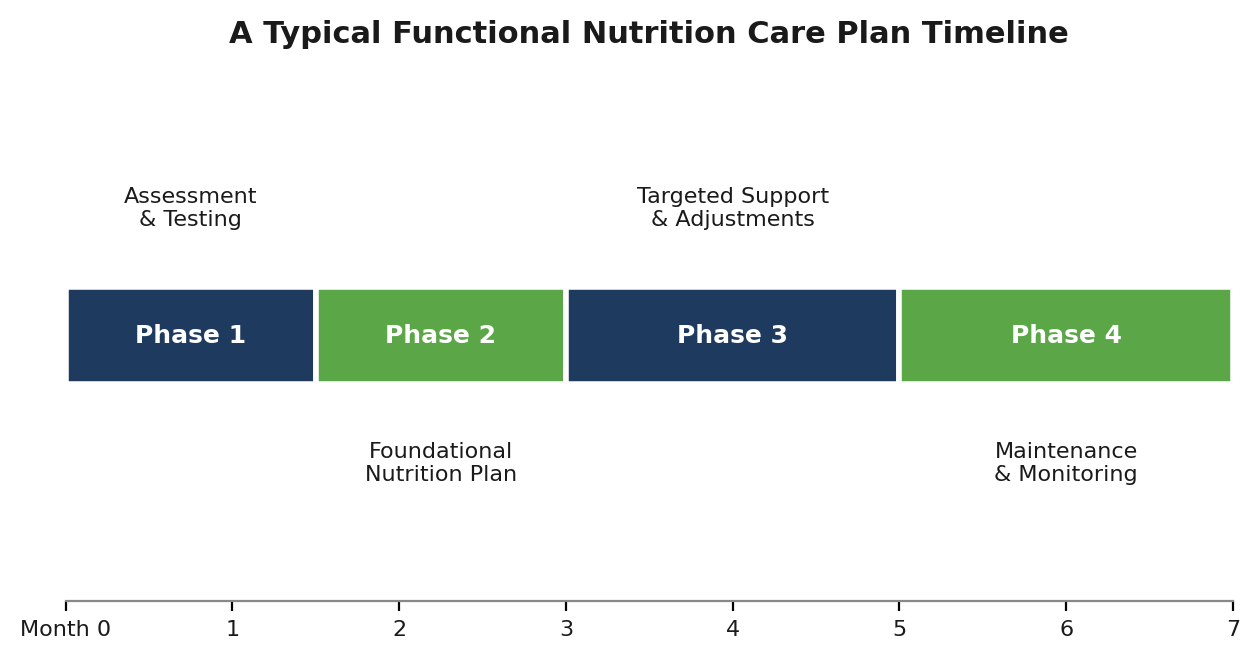
When choosing who to work with, ask how they use lab testing, whether care is supervised by qualified clinicians, and how follow-up is structured. Those three answers separate genuine root-cause nutrition care from generic meal planning.
Nutritional healing is steady rather than instant. Patients often describe better energy and digestion within the first several weeks, with deeper changes in labs, sleep, mood, and weight building over the following months. In our experience working with thousands of patients since 2012, the people who improve most are the ones who commit to the full care plan rather than chasing quick fixes. The body is designed to move toward balance when it is given the right raw materials and enough time.
A functional medicine nutritionist uses your health history and comprehensive lab work, read through optimal ranges, to build a personalized food and lifestyle plan that addresses the root causes of symptoms like fatigue, digestive issues, and hormonal imbalance. Unlike generic diet advice, the plan is data-driven, coordinated with a functional medicine doctor, and refined over a structured care plan until your progress holds.
These are the questions patients most often ask before starting functional nutrition care. If your question is not covered here, our care team is happy to answer it during a consultation.
1. What does a functional medicine nutritionist do?
They assess your health history and lab work to find the nutritional root causes behind your symptoms, then build a personalized food, supplement, and lifestyle plan. The focus is on why symptoms exist, not just on calories or weight.
2. How is a functional medicine nutritionist different from a regular dietitian or nutritionist?
Conventional counseling usually applies standard guidelines to manage a condition or weight. A functional medicine nutritionist works from comprehensive testing interpreted through optimal ranges and coordinates care across body systems like the gut, thyroid, and blood sugar regulation.
3. Is a functional medicine nutritionist the same as a naturopathic doctor?
No. A naturopathic doctor is a clinician trained in natural, whole-body medicine who can oversee your full care, while a nutritionist focuses specifically on food and nutrient strategies. At Integrative Wellness Centers, nutrition guidance is delivered within a clinician-led functional medicine framework, so you benefit from both perspectives.
4. What conditions can functional nutrition support?
Nutrition work commonly supports fatigue, thyroid issues, hormonal imbalance, digestive problems, blood sugar concerns, autoimmune conditions, brain fog, and skin issues. It complements, rather than replaces, any medical care you are receiving.
5. Do I need special testing before starting?
Testing is strongly recommended because it removes guesswork. Comprehensive labs reveal deficiencies and imbalances that a symptom conversation alone cannot, and they give you an objective baseline for measuring progress.
6. Can I work with a functional medicine nutritionist online if I am not near Livonia?
Yes. Integrative Wellness Centers sees patients in-person across Michigan and via Zoom in most US states, with lab work coordinated near where you live. Telehealth is not available in Hawaii, Alaska, New York, Rhode Island, or New Jersey.
7. How long until I notice results?
Many patients notice improvements in energy and digestion within the first few weeks, while deeper changes typically build across a 4 to 7 month care plan. Timelines vary because every body and every root cause is different.
If this article resonated with what you have been going through, the next step is finding out whether a functional medicine approach to nutrition is the right fit for your situation. Integrative Wellness Centers has supported thousands of patients since 2012, both in-person across Michigan and via Zoom in most US states. Request a new patient consultation to start the conversation with our care team, or call 734-779-1650.
Medical Disclaimer: This article is for informational and educational purposes only. It is not intended as medical advice and should not replace consultation with a qualified healthcare provider. Integrative Wellness Centers makes no claims to diagnose, treat, cure, or prevent any disease. Always consult your doctor before making changes to your health regimen or discontinuing any medication.

Take the online digestive evaluation to instantly discover what systems of your body are the cause of your health issues.
Online Digestive EvaluationTake the TestOnline Female Hormone EvaluationOnline Male Hormone Evaluation


