
Fatigue, cramps, anxiety, poor sleep? Magnesium deficiency symptoms often hide behind normal labs. Learn why doctors miss it and how functional medicine finds the root cause.
You feel exhausted no matter how much you sleep. Your muscles twitch or cramp at night, your heart occasionally skips or flutters, and your anxiety has crept up for no obvious reason. So you do the responsible thing and get bloodwork done, only to hear the phrase so many of our patients know by heart: "everything looks normal." If that describes you, magnesium deficiency symptoms deserve a much closer look, because this is one of the most common nutrient problems in the country and one of the easiest to miss on a standard lab panel.
In this article, we break down the symptoms of low magnesium that are most often overlooked, why conventional testing frequently fails to catch the problem, what actually depletes magnesium in the first place, and how a functional medicine approach identifies and addresses the deficiency at its root. It reflects the same testing-not-guessing philosophy Integrative Wellness Centers has used with patients since 2012.
If you have been dealing with unexplained fatigue, muscle cramps, or anxiety and conventional workups have not given you answers, you are not alone. Integrative Wellness Centers works with patients in-person across Michigan and via Zoom in most US states to uncover what is actually driving these symptoms. You can schedule a new patient consultation to discuss your specific situation with our care team.
Magnesium is not a minor player. It acts as a cofactor in more than 300 enzyme systems in the body, including the reactions that produce cellular energy, regulate muscle and nerve function, control blood sugar, and manage blood pressure. When magnesium runs low, no single system fails loudly. Instead, many systems start underperforming quietly at the same time, which is exactly why the symptoms feel so vague and scattered.
Left unaddressed, low magnesium does more than make you feel unwell. Research has linked chronic magnesium depletion to insulin resistance, high blood pressure, migraines, heart rhythm disturbances, and worsening anxiety and sleep problems. Because magnesium also regulates calcium and potassium balance, a deficiency can drag other minerals down with it. Addressing it early is far simpler than untangling the downstream problems years later.
Clinically, a severely low blood magnesium level is called hypomagnesemia, and it involves obvious problems like seizures and dangerous heart arrhythmias. But most people never get anywhere near that point. What they experience instead is a long stretch of low-grade depletion, where the body keeps blood levels stable by borrowing magnesium from bone and muscle while tissues slowly run short. The symptoms of that in-between state are the ones most doctors overlook.
Early and commonly missed magnesium deficiency symptoms include:
Individually, each of these has a dozen possible explanations, which is part of the problem. A patient mentions cramps to one doctor, palpitations to a cardiologist, and anxiety to a therapist, and nobody steps back to ask whether one underlying deficiency connects them. In our experience working with patients since 2012, that pattern of scattered, "unexplained" complaints is one of the strongest clues that mineral status deserves real investigation.
The core issue is how magnesium is tested. The standard serum magnesium test measures only what is circulating in your blood, yet more than 99% of the body’s magnesium is stored inside cells and bone, not in the bloodstream. A 2018 review in the journal Open Heart concluded that because serum levels do not reflect intracellular magnesium, most cases of magnesium deficiency go undiagnosed. Your body treats blood magnesium as a priority and will pull the mineral out of bone and muscle to keep serum levels stable, so the test can read "normal" while your tissues are running on empty.
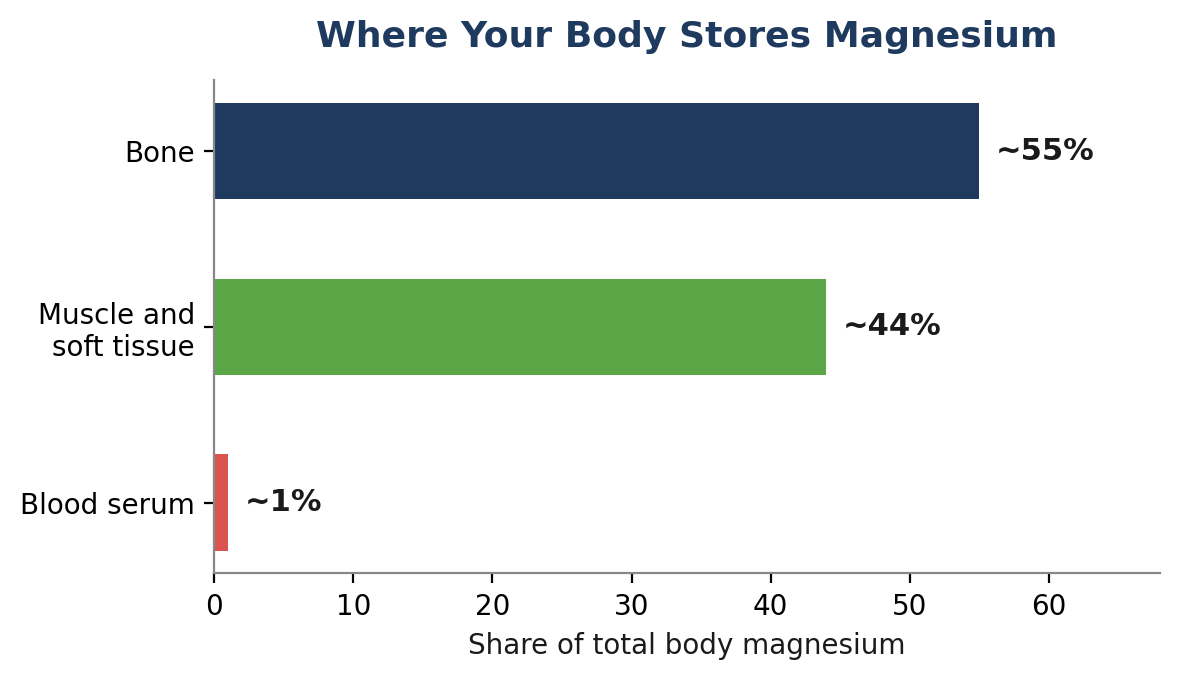
There is a second problem. Serum magnesium is not even included on most routine blood panels, so unless a doctor specifically suspects a deficiency, the level is never checked at all. And when it is checked, the standard reference range is built to flag severe deficiency, not the subclinical depletion where most symptomatic patients live. This is a textbook example of the difference between standard lab ranges and optimal ranges, a distinction that sits at the center of how a functional medicine doctor reads bloodwork.
Here is how the two testing approaches compare:
Finding low magnesium is only half the job. The more important question is why it dropped in the first place, because supplementing without fixing the drain rarely produces lasting change. These are the root causes our functional medicine team investigates most often.
Magnesium is concentrated in leafy greens, nuts, seeds, legumes, and whole grains, foods that make up a shrinking share of the typical American plate. Food processing strips most of the magnesium out of grains, and decades of intensive farming have reduced the mineral content of many crops. The result is that a large share of Americans consume less magnesium than recommended, before any absorption problem even enters the picture.
You are not what you eat, you are what you absorb. Conditions like celiac disease, Crohn’s disease, chronic diarrhea, low stomach acid, and an imbalanced gut microbiome all reduce how much magnesium actually makes it from your food into your cells. This is why digestive complaints and mineral deficiencies so often show up in the same patient, and why gut testing is frequently part of a thorough workup.
Several widely prescribed medications deplete magnesium or increase its loss, including proton pump inhibitors for acid reflux and diuretics for blood pressure. Long-term use of these medications without mineral monitoring is one of the most common overlooked drivers we see. This is never a reason to stop a prescribed medication on your own, but it is a strong reason to have your mineral status assessed properly.
Stress and magnesium form a vicious cycle. Stress hormones increase the amount of magnesium your kidneys excrete, and low magnesium in turn makes your nervous system more reactive to stress. Many patients who describe themselves as anxious, tense, and unable to wind down are living inside this loop without knowing it.
Elevated blood sugar and insulin resistance cause the kidneys to flush more magnesium into the urine, which is why deficiency is so common in prediabetes and diabetes. Regular alcohol use compounds the problem by impairing absorption and increasing urinary loss at the same time.
Conventional care usually stops at a normal serum level or a generic "take a supplement" suggestion. An integrative medicine approach goes several steps further, treating the deficiency as a signal to be traced rather than a box to be checked. At Integrative Wellness Centers, our team of functional medicine and naturopathic doctors follows a consistent process.
Rather than relying on a single serum value, advanced lab testing looks at markers like RBC magnesium alongside related minerals, vitamin D, blood sugar markers, thyroid function, and gut health where indicated. Just as important, results are interpreted against optimal ranges, the tighter windows where patients tend to feel well, instead of only the broad standard ranges designed to catch disease.
The right plan depends on the root cause. A patient depleted by a proton pump inhibitor needs a different strategy than one with gut malabsorption or unmanaged stress. Plans typically combine targeted food changes, the appropriate form and dose of supplementation when needed, and coordination with your prescribing physician when medications are part of the picture.
Because diet and stress are two of the biggest magnesium drains, both get direct attention. That means building magnesium-rich foods into meals you will actually eat, and addressing sleep, stress load, alcohol, and blood sugar patterns that keep pulling the mineral back down.
Mineral repletion is not a one-and-done event. Levels are retested over time, symptoms are tracked, and the plan is adjusted as your body responds. If you are wondering what this looks like in practice, our overview of working with a functional medicine doctor explains how this root-cause process differs from a standard office visit.
Understanding whether magnesium deficiency is behind your symptoms starts with the right testing and a care team that takes the time to listen. Integrative Wellness Centers offers in-person care across Michigan and Zoom consultations for patients in most US states. If you are ready to stop guessing and start getting answers, you can book a consultation with our functional medicine team.
Restoring magnesium takes longer than most people expect. Because the body stores the mineral in bone and tissue, refilling those reserves is a gradual process measured in months, not days. Many patients notice early shifts, often in sleep quality, muscle cramps, or that background hum of anxiety, within the first several weeks, while deeper changes in energy and resilience build over a 4 to 7 month care plan.
The encouraging part is that the body is designed to heal when it is given the right raw materials and the drains are addressed. Patients who correct both the deficiency and its underlying cause tend to hold their improvements, rather than cycling back into the same symptoms a year later. That durability is the real difference between chasing symptoms and addressing root causes.
Magnesium deficiency symptoms like fatigue, muscle cramps, anxiety, poor sleep, and palpitations are frequently overlooked because standard blood tests measure only the roughly 1% of magnesium circulating in serum, so results can look normal while tissue levels are depleted. A functional medicine workup uses markers like RBC magnesium, interprets them against optimal ranges, and addresses the diet, gut, medication, and stress factors that caused the depletion in the first place.
These are the questions patients most often ask about low magnesium. If your situation is more specific, a consultation is the best place to get answers tailored to your health history.
1. Can I have magnesium deficiency if my blood test is normal?
Yes. More than 99% of your magnesium is stored in cells and bone, and the body keeps blood levels stable by drawing from those stores. A normal serum result rules out severe deficiency, but it cannot rule out the chronic tissue-level depletion that drives most symptoms.
2. What are usually the first signs of low magnesium?
The earliest signs tend to be subtle: muscle twitches or cramps, fatigue, poor sleep, and a lower threshold for stress and anxiety. Because these symptoms are so common and nonspecific, they are easy to attribute to aging, stress, or a busy life.
3. What is the most accurate way to test for magnesium deficiency?
No single test is perfect, but RBC magnesium, which measures the mineral inside red blood cells, gives a better window into tissue status than serum alone. A functional medicine doctor will typically read it alongside your symptoms, diet, medications, and related markers rather than in isolation.
4. Which medications can deplete magnesium?
Proton pump inhibitors used for acid reflux and certain diuretics used for blood pressure are the most common examples, and regular alcohol use has a similar effect. Never stop a prescribed medication on your own; instead, ask to have your mineral status evaluated and monitored.
5. Can I fix low magnesium with food alone?
If your levels are only mildly low and your absorption is healthy, consistently eating magnesium-rich foods like pumpkin seeds, spinach, almonds, black beans, and whole grains can make a meaningful difference. When depletion is deeper or a gut, medication, or blood sugar issue is driving losses, food alone is usually not enough.
6. Should I just start taking a magnesium supplement?
Supplementing blindly is better than nothing for some people, but it can mask the real problem and the form and dose matter more than most labels suggest. Testing first, then supplementing strategically while fixing the underlying drain, is safer and far more effective.
7. How long does it take to restore magnesium levels?
Blood levels can respond within weeks, but replenishing tissue and bone stores generally takes several months of consistent intake. Most patients work through a structured plan with periodic retesting to confirm the trend is moving the right way.
If this article sounds like the story you have been living, the next step is finding out whether a naturopathic and functional medicine approach is the right fit for your situation. Integrative Wellness Centers has supported thousands of patients since 2012, both in-person across Michigan and via Zoom in most US states. Request a new patient consultation to start the conversation with our care team, or call 734-779-1650.
Medical Disclaimer: This article is for informational and educational purposes only. It is not intended as medical advice and should not replace consultation with a qualified healthcare provider. Integrative Wellness Centers makes no claims to diagnose, treat, cure, or prevent any disease. Always consult your doctor before making changes to your health regimen or discontinuing any medication.

Take the online digestive evaluation to instantly discover what systems of your body are the cause of your health issues.
Online Digestive EvaluationTake the TestOnline Female Hormone EvaluationOnline Male Hormone Evaluation


