
Does insurance cover functional medicine or naturopathic care? Learn what plans actually pay for, how HSA and FSA funds help, and what Michigan patients should expect.
If you have been researching a functional medicine doctor or a naturopathic doctor, there is a good chance you already know the frustration that brought you here. You have seen specialist after specialist, been told your labs look normal, and left appointments with another prescription but no real answers. Root cause care sounds like exactly what has been missing. Then the practical question arrives: does insurance cover functional medicine, or will you be paying for everything yourself? It is one of the most common questions patients ask before booking a first visit, and it deserves an honest, complete answer rather than a one word reply.
This guide explains how health insurance actually handles functional medicine, integrative medicine, and naturopathic care, which parts of your care may still be covered, and how Michigan patients use HSA funds, FSA funds, and out-of-network benefits to make root cause care more affordable. It also covers how Integrative Wellness Centers structures care so you know exactly what to expect financially before you ever commit to a plan.
If you have been weighing the cost of functional medicine against the cost of staying stuck, you are asking the right questions. Integrative Wellness Centers works with patients in person across Michigan and via Zoom in most US states, and our care team is upfront about costs from the very first conversation. You can schedule a free new patient consultation to get clear answers about your specific situation.
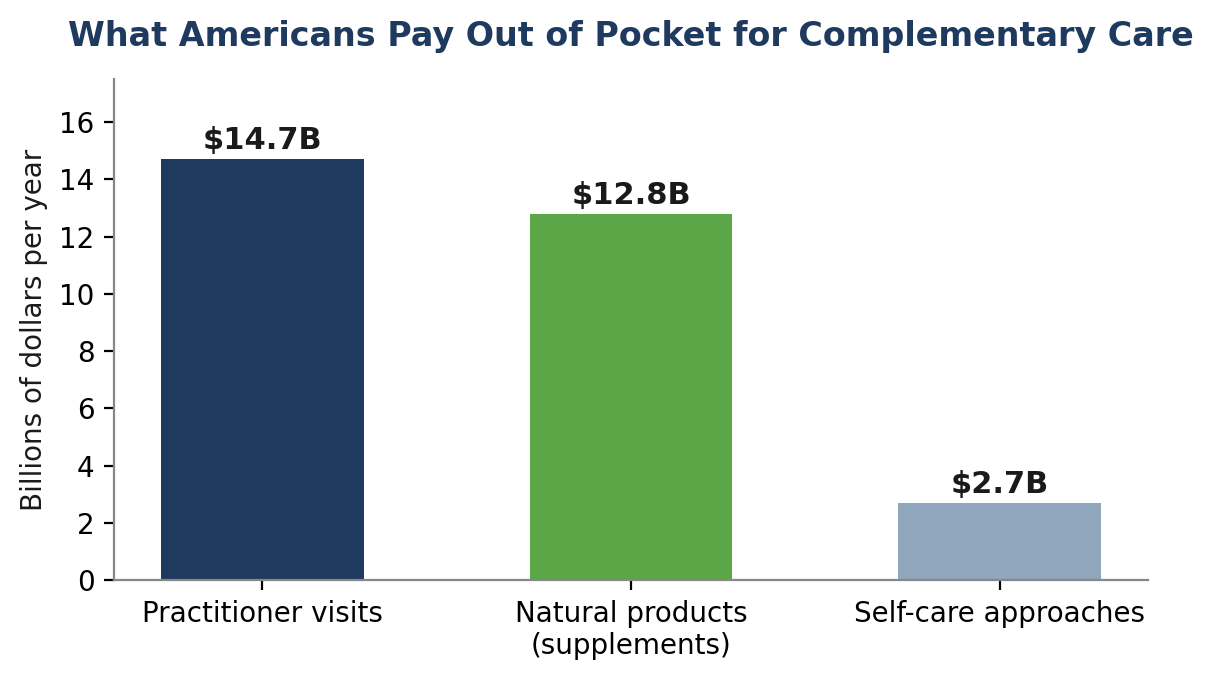
Cost is often the deciding factor between starting root cause care and staying in the symptom management cycle. Americans spend an estimated $30.2 billion out of pocket each year on complementary health approaches, according to the National Center for Complementary and Integrative Health, part of the NIH. That figure covers practitioner visits, supplements, and self-care products, and most of it is deliberate spending by people who decided the results were worth it.
Understanding your coverage before you book helps you:
In most cases, health insurance does not directly cover functional medicine consultations, and it rarely covers naturopathic or holistic medicine visits either. Functional medicine is a systems-based clinical approach that asks why illness is present rather than only naming it, a model that Cleveland Clinic describes as patient-centered chronic disease care built on longer visits, detailed history taking, and personalized plans. Because that model does not fit standard insurance billing, most functional medicine doctors practice outside insurance networks.
That said, no direct coverage is not the same as no coverage at all. Standard blood work, prescription medications, and imaging ordered through conventional channels often still run through your plan, and tax-advantaged accounts can cover much of the rest. If you are new to the model, our overview of what functional medicine is in Michigan explains how it differs from conventional primary care and why so many patients choose it even without insurance support.
The gap between insurance and root cause medicine is structural, not personal. Three features of the insurance system explain most of it.
Insurance reimbursement runs on standardized diagnosis and procedure codes. A conventional visit converts your symptoms into a billable code and matches it with a covered procedure or prescription. Functional medicine looks at interconnected body systems, and many chronic patients do not fit neatly into a single reimbursable code. Peer-reviewed research on functional medicine based care, including a study of Cleveland Clinic functional medicine patients published in BMJ Open, describes a model built on extended visits, root cause investigation, and team-based support, which is a poor match for code-driven reimbursement.
A new patient functional medicine consultation commonly runs an hour or more, with additional time spent reviewing intake forms, medical history, and lab results between visits. Insurance reimbursement rates are calibrated around much shorter appointments. A practice that bills insurance for a 12 minute visit model cannot deliver the depth that root cause work requires, which is why most functional medicine and naturopathic practices moved to direct payment instead of compromising the care.
Functional medicine relies on advanced lab testing that goes deeper than a standard annual panel. That can include a full thyroid workup with TSH, Free T3, Free T4, Reverse T3, and thyroid antibodies, hormone mapping such as the DUTCH test, stool analysis such as the GI-MAP, and nutrient or toxin screening. Insurers frequently classify these panels as not medically necessary, so they are billed directly to the patient. The upside is that many specialty labs offer cash-pay rates, and conventional markers within a workup can sometimes still be processed through your covered lab.
Naturopathic medicine, as described by the National Center for Complementary and Integrative Health, aims to prevent and address illness by supporting the body’s own healing capacity through nutrition, lifestyle, and natural therapies. Coverage depends heavily on where you live. A small number of states require certain insurance plans to reimburse licensed naturopathic physicians, but in most of the country, including for most Michigan patients, naturopathic care is self-pay.
That does not change the value patients find in the approach. It simply means the financial planning looks different. If you are comparing providers, it helps to understand what a naturopathic doctor in Michigan actually does and how that work overlaps with functional and integrative medicine. At Integrative Wellness Centers, functional, integrative, holistic, and naturopathic principles operate under one root cause framework rather than as separate services with separate price tags.
Even in a mostly self-pay model, several pieces of your care commonly still touch insurance. The table below summarizes what patients typically see, though every plan is different and you should always verify with yours.
Tax-advantaged accounts are the most common tool patients use to offset functional medicine costs. A health savings account, available with high deductible health plans, lets you pay for qualified medical expenses with pretax dollars. A flexible spending arrangement works similarly through an employer. Both can generally be applied to medical consultations and lab testing, and some plans allow supplement purchases with a letter of medical necessity. Rules differ between administrators, so confirm eligibility with your account provider before assuming an expense qualifies.
Out-of-network benefits are the second tool worth checking. Some PPO plans reimburse a percentage of out-of-network care after a separate deductible. If your plan offers this, an itemized receipt from your provider may recover part of your visit costs. Medicare and Medicaid generally do not cover functional medicine services unless a specific service falls into a standard covered category.
Integrative Wellness Centers has supported thousands of patients since 2012, in person across Michigan and via Zoom in most US states. Because most root cause care sits outside insurance, we structure care so the investment is clear, purposeful, and tied to results you can measure.
Advanced lab testing is the foundation of every care plan. Rather than running the same basic panel that already came back normal, our functional medicine team evaluates markers against optimal ranges, not just standard reference ranges, so subtle dysfunction shows up before it becomes a diagnosis. Every dollar spent on testing exists to answer a specific question about your health, not to pad a workup.
Most patients follow a structured care plan over roughly 4 to 7 months, with testing, targeted nutrition and lifestyle changes, and regular monitoring built in. A defined arc means you know the scope of the commitment before you start, instead of paying for open-ended visits with no endpoint in sight.
The new patient consultation exists partly to answer the money questions. Before you begin care, you will understand what the process involves, what testing may be recommended, and what the investment looks like, so there are no surprises three visits in.
Understanding what your care will cost starts with understanding what your body actually needs. If you are ready to stop guessing and get a clear picture of both, you can book a consultation with our functional medicine team and get your questions answered directly.
A ten minute phone call to your insurer can save you real money. The NIH recommends asking direct, specific questions and keeping records of every call. Useful ones include:
Write down the date, the representative’s name, and a reference number for each call. If a claim is later disputed, those notes matter.
Most health insurance plans do not directly cover functional medicine or naturopathic medicine visits because root cause care does not fit the diagnosis code billing model. Many patients still offset costs through covered conventional labs, out-of-network benefits, and HSA or FSA funds, which often makes care more affordable than it first appears. If you are asking does insurance cover functional medicine, plan for self-pay as the baseline and treat any reimbursement as a bonus.
These are the questions Michigan patients ask most often about paying for functional and naturopathic care. Answers are general, so always confirm details with your own insurance plan.
1. Does insurance cover functional medicine visits?
Usually no. Most functional medicine doctors practice outside insurance networks because longer visits and root cause workups do not fit standard billing codes. Some PPO plans reimburse a portion of out-of-network visits, so it is worth checking your specific benefits.
2. Are functional medicine lab tests covered by insurance?
Standard blood work is often covered when processed through an in-network lab. Advanced panels such as the GI-MAP, the DUTCH test, or comprehensive nutrient testing are usually billed directly, though many labs offer discounted cash-pay rates.
3. Can I use my HSA or FSA for functional or naturopathic medicine?
In most cases, yes. Consultations and lab testing generally qualify as medical expenses, which means pretax dollars can cover them. Supplements sometimes require a letter of medical necessity, so check with your account administrator first.
4. Does Medicare or Medicaid cover functional medicine?
Generally no. Medicare and Medicaid reimburse services within standard covered categories, and functional medicine consultations typically fall outside them. Conventional labs and prescriptions connected to your care may still be covered through those programs.
5. Does insurance cover naturopathic doctors in Michigan?
Rarely. Insurance reimbursement for naturopathic care is concentrated in a small number of states with specific coverage laws, and most Michigan patients pay for naturopathic services directly, often using HSA or FSA funds to soften the cost.
6. Is functional medicine worth the cost without insurance coverage?
That depends on your situation, but many patients compare years of copays, specialist visits, and prescriptions that never resolved anything against a focused, time-limited care plan aimed at the root cause. A consultation is the best way to weigh the investment against what you have already spent.
7. How do I find out exactly what my plan covers?
Call the member services number on your insurance card and ask the specific questions listed earlier in this article. Get answers in writing where possible and keep notes from every call.
If this guide answered the money questions, the next step is finding out whether root cause care is the right fit for your health questions. Integrative Wellness Centers has worked with patients since 2012, in person across Michigan and via Zoom in most US states. Request a new patient consultation to talk through your situation, your goals, and your costs with our care team.
Medical Disclaimer: This article is for informational and educational purposes only. It is not intended as medical advice and should not replace consultation with a qualified healthcare provider. Integrative Wellness Centers makes no claims to diagnose, treat, cure, or prevent any disease. Always consult your doctor before making changes to your health regimen or discontinuing any medication.

Take the online digestive evaluation to instantly discover what systems of your body are the cause of your health issues.
Online Digestive EvaluationTake the TestOnline Female Hormone EvaluationOnline Male Hormone Evaluation


