
Learn the differences between food allergies, food sensitivities, and food intolerances, their symptoms, causes, and science-backed strategies to heal and improve gut health.
Reactions to certain foods are more common than many people realize. Millions of people experience symptoms like bloating, headaches, fatigue, skin rashes, or digestive discomfort after eating specific foods. However, these reactions are often misunderstood.
Many people believe they have a food allergy, when in reality they may be experiencing food sensitivities or food intolerances.
Understanding the difference between food allergies, food sensitivities, and food intolerances is critical for proper diagnosis, treatment, and long-term health management. Although these conditions may share similar symptoms, they involve different biological mechanisms and require different approaches to healing.
This guide explains the differences between food allergies, food sensitivities, and food intolerances, how they affect the body, and how to manage them.
Food reactions rarely occur randomly. Several factors may increase the risk of developing food sensitivities or intolerances. Common contributing factors include:
Gut health plays a particularly important role because the digestive system is closely connected to the immune system. When the gut lining becomes compromised, the immune system may react more strongly to certain foods.
A food allergy occurs when the immune system mistakenly identifies a harmless food protein as a dangerous substance. The body responds by producing antibodies called immunoglobulin E (IgE). These antibodies trigger immune cells to release chemicals such as histamine, leading to allergic symptoms.
Even tiny amounts of the allergenic food can trigger reactions. According to medical research, a food allergy is an immune system reaction that can occur soon after eating a trigger food.
The most common food allergens include: Peanuts, tree nuts, milk, eggs, wheat, soy, fish, shellfish. These foods are responsible for the majority of allergic reactions worldwide.
Food allergy symptoms can appear quickly, sometimes within minutes.
Common symptoms include:
Skin symptoms
Respiratory symptoms
Digestive symptoms
In severe cases, a reaction called anaphylaxis may occur, which is life-threatening and requires emergency treatment.
Food sensitivities are often used as a broader term describing delayed reactions to certain foods. Unlike food allergies, they usually do not cause immediate immune reactions. Instead, food sensitivities may involve:
Symptoms may appear hours or even days after eating the triggering food, which makes them harder to identify.
Common foods that may cause sensitivities include gluten, dairy, soy, eggs, corn, and food additives, although triggers can vary from person to person.
Symptoms may include:
These symptoms may occur without the severe reactions associated with allergies. Because they are delayed and subtle, food sensitivities often require elimination diets or professional testing to identify.
Read more Nutrient Deficiencies Explained: Causes, Signs, Treatment
A food intolerance happens when your body has trouble digesting a certain food. Unlike food allergies, it does not involve the immune system and mainly affects the digestive system. This often occurs because the body lacks the enzymes needed to properly break down certain foods, which can lead to symptoms like bloating, gas, or stomach discomfort. For example:
Food intolerance reactions usually depend on how much of the food is consumed.
Food intolerances may be caused by:
Common intolerances include:
Food intolerance symptoms usually affect the digestive system. Unlike allergies, food intolerance symptoms are rarely life-threatening, typical symptoms include:
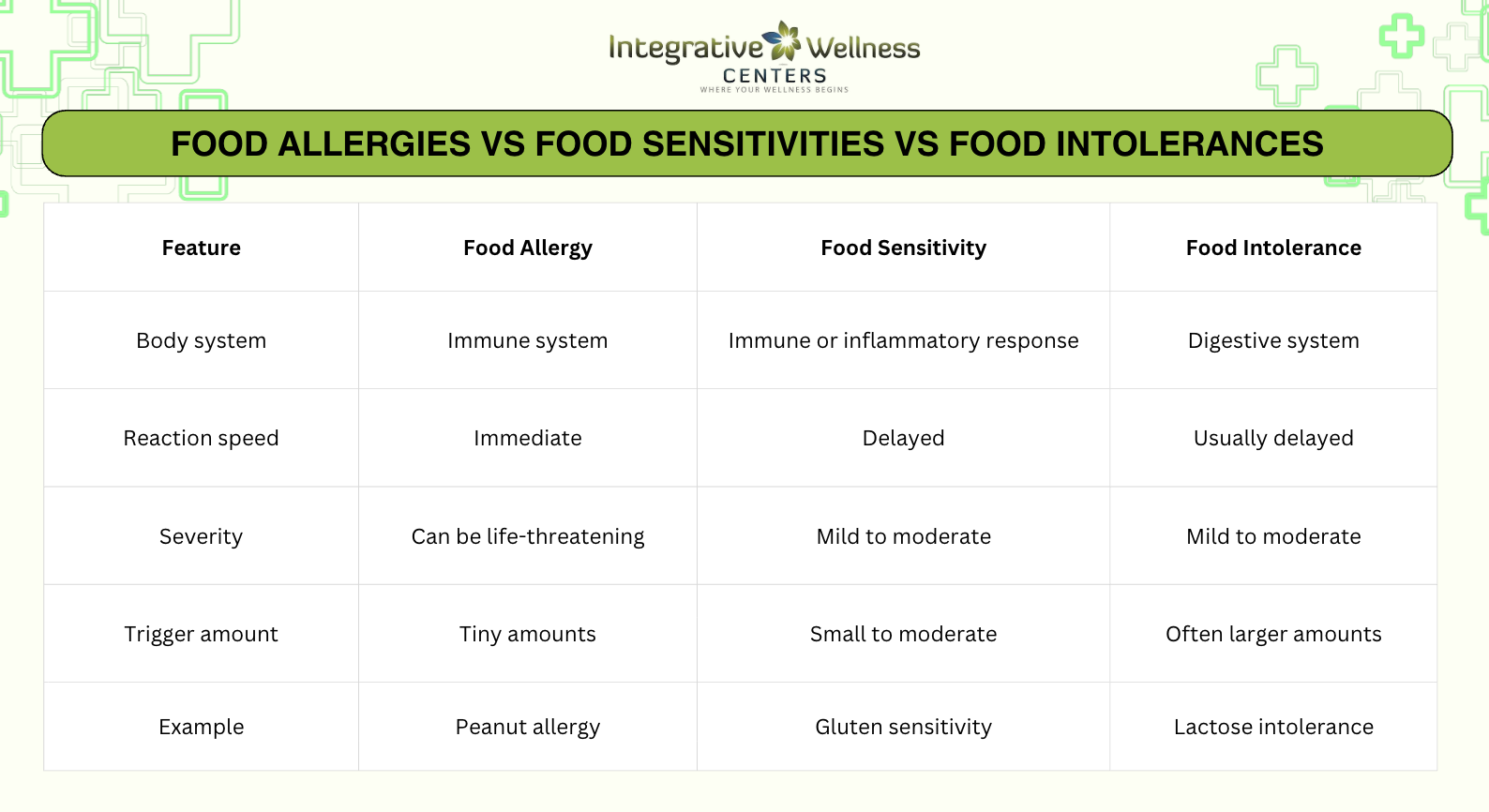
Most food reactions are actually food intolerances rather than allergies, which is why confusion is common.
Read more about Comprehensive Gut Health Test
Diet and lifestyle both play an important role in supporting gut health and reducing food sensitivity symptoms. Eating anti-inflammatory, nutrient-rich foods can help maintain a balanced gut microbiome. Helpful foods include leafy green vegetables, fermented foods such as yogurt or kimchi, fiber-rich fruits, omega-3 rich fish, avocado, nuts, seeds, and bone broth. In general, focusing on whole and minimally processed foods can support better digestion and overall gut health.
Lifestyle habits are equally important. Managing stress through activities like meditation, yoga, or breathing exercises can help support digestive and immune balance. Getting enough sleep around 7–9 hours per night and staying physically active through activities like walking, cycling, or swimming may also improve gut health.
Functional medicine focuses on identifying and addressing the root causes of health problems rather than only treating symptoms. When it comes to food sensitivities, this approach is often considered favorable because it looks at the bigger picture such as gut health, inflammation, diet, stress, and lifestyle factors that may trigger reactions to certain foods.
Instead of simply avoiding problem foods forever, functional medicine practitioners aim to understand why the body is reacting in the first place. Food sensitivities are often linked to issues such as gut imbalance, digestive dysfunction, chronic inflammation, or disruptions in the gut microbiome.
A common strategy used in functional medicine is an elimination diet, where potential trigger foods are temporarily removed from the diet and then slowly reintroduced to identify which foods cause symptoms. At the same time, practitioners focus on supporting gut health through nutrient-rich foods, improving digestion, and addressing lifestyle factors such as stress and sleep.
This approach is often favored because it takes a holistic and personalized view of health, helping individuals understand their unique triggers while working toward improving gut function and overall well-being.
Food allergies, food sensitivities, and food intolerances affect the body in different ways. Food allergies involve the immune system and can cause severe reactions, while food sensitivities and intolerances usually lead to delayed or digestive symptoms. A functional medicine approach can help identify the root causes, such as gut health and inflammation. If you experience food-related symptoms, you may consider scheduling a consultation with a functional medicine doctor at Integrative Wellness Centers for personalized guidance.
Food allergies are usually tested through medical evaluations such as skin prick tests, blood tests (IgE tests), or supervised oral food challenges. A doctor or allergist will review symptoms and medical history to determine the most appropriate test.
Food allergies may sometimes contribute to skin issues, including acne, although acne is more commonly linked to food sensitivities or inflammation rather than true allergies. Foods like dairy or high-glycemic foods may trigger breakouts in some individuals.
A food allergy test is a medical test used to identify whether the immune system reacts to certain foods. Common tests include skin prick tests, blood tests that measure IgE antibodies, and elimination diets supervised by healthcare professionals.
To identify hidden allergens, carefully read ingredient labels and look for common allergen warnings such as “contains,” “may contain,” or “processed in a facility with.” Many countries require labeling for major allergens like milk, eggs, peanuts, tree nuts, wheat, soy, fish, and shellfish.
Common allergenic foods include peanuts, tree nuts, milk, eggs, wheat, soy, fish, and shellfish. These foods account for most food allergy reactions worldwide.
Yes, genetics can play a role in food allergies. If a parent has allergies, asthma, or eczema, their children may have a higher risk of developing food allergies or other allergic conditions.
Yes, food allergies can sometimes cause digestive symptoms such as diarrhea, stomach cramps, nausea, or vomiting, especially in children. These symptoms occur when the immune system reacts to a trigger food.
Yes, dogs and cats can develop food allergies. Common symptoms include itching, skin irritation, digestive issues, and ear infections. A veterinarian may recommend an elimination diet or special hypoallergenic food to identify the trigger.

Take the online digestive evaluation to instantly discover what systems of your body are the cause of your health issues.
Online Digestive EvaluationTake the TestOnline Female Hormone EvaluationOnline Male Hormone Evaluation


