Top Functional Medicine Clinics in Michigan with Online Consultation & Lab Testing
Discover top functional medicine clinics in Michigan offering online consultations and advanced lab testing for personalized health care.
Modern healthcare is evolving rapidly, and many patients are now exploring more personalized approaches to wellness. One area gaining significant attention is functional medicine, which focuses on identifying the root causes of health problems rather than simply treating symptoms.
Functional medicine clinics increasingly offer online consultations and advanced lab testing, allowing patients to receive personalized care from home. Through virtual visits, at-home lab kits, and detailed biomarker analysis, functional medicine practitioners can evaluate digestion, hormones, metabolism, immune function, and more.
Unlike conventional medical models that often rely on generalized treatment protocols, functional medicine emphasizes individualized healthcare based on genetics, lifestyle, environment, and nutritional status. This approach helps practitioners design personalized treatment strategies that address underlying health imbalances.
This article explains what a functional medicine practitioner does, how functional medicine testing works, and which functional medicine clinics in Michigan have online consultation and lab testing
A functional medicine practitioner is a healthcare professional trained to identify and treat the root causes of disease rather than simply managing symptoms.
Functional medicine doctors may include:
Medical doctors (MD or DO)
Naturopathic doctors (ND)
Chiropractors (DC)
Integrative medicine specialists
Functional nutritionists
Functional medicine health coaches
Core Principles of Functional Medicine
Functional medicine practitioners typically follow a patient-centered model built on several key principles.
Root cause medicine:Instead of focusing on symptoms alone, practitioners identify biological imbalances causing illness.
Whole-body systems approach: The body is viewed as an interconnected system rather than separate organs.
Personalized healthcare: Treatment plans are tailored to the individual’s genetics, lifestyle, diet, and environment.
Preventive focus: Early testing and lifestyle changes can prevent chronic disease progression.
Conditions Commonly Treated
Functional medicine clinics often address complex or chronic conditions such as:
Because functional medicine evaluates multiple systems simultaneously, it is particularly useful for patients who experience multiple symptoms with unclear diagnoses.
What Functional Medicine Lab Testing Is and How It Works
Functional medicine relies heavily on advanced laboratory testing to uncover hidden imbalances in the body. Traditional lab tests often determine whether values fall within a broad “normal range.” Functional medicine tests instead focus on optimal ranges and patterns across body systems, allowing practitioners to identify subtle dysfunctions earlier.
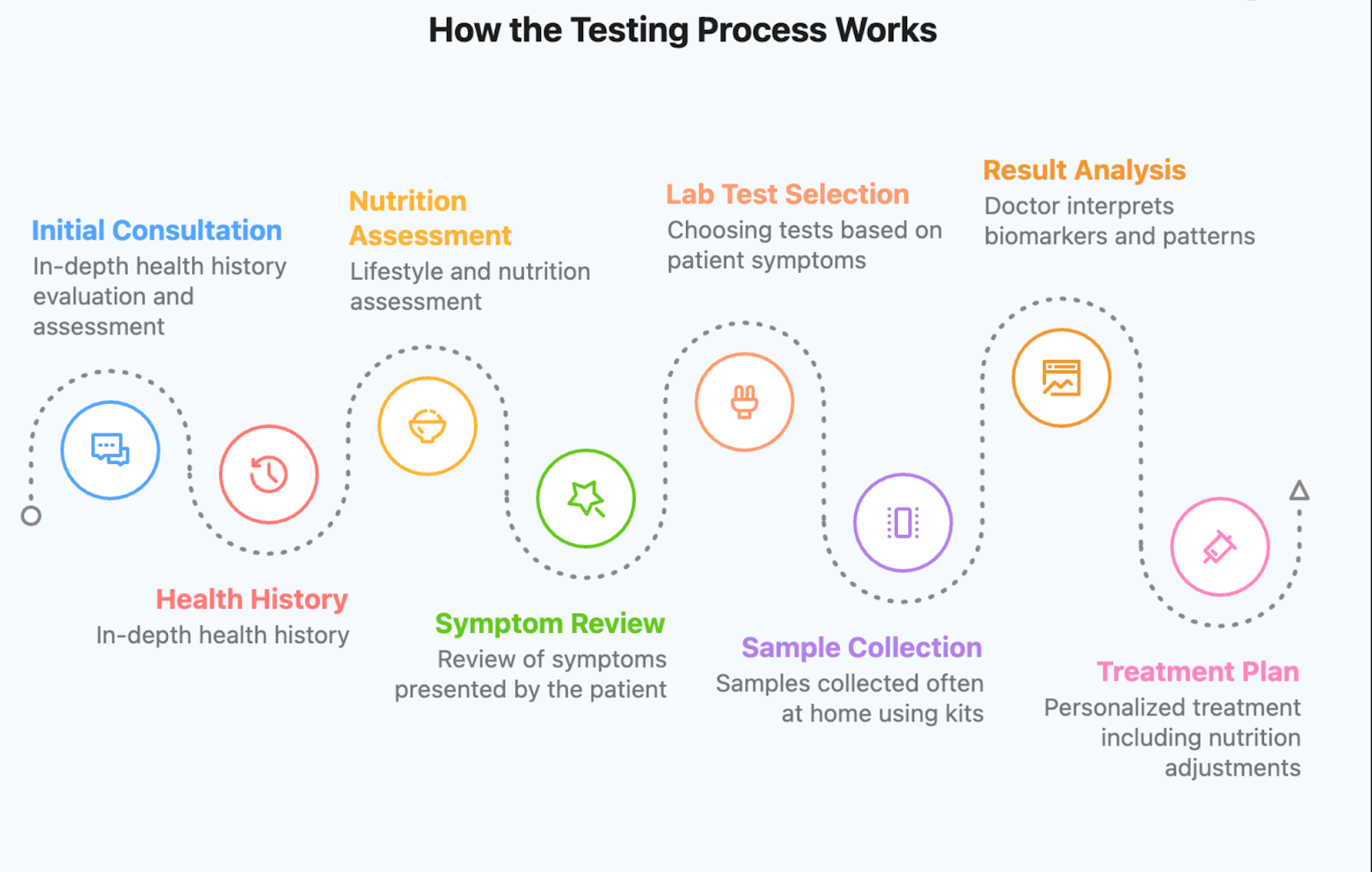
How the Testing Process Works
Most functional medicine clinics follow a similar workflow.
Initial Consultation
In-depth health history
Lifestyle and nutrition assessment
Symptom review
Lab Test Selection
Based on patient symptoms
May include stool, blood, urine, saliva, or genetic tests
Sample Collection
Often done at home using lab kits
Samples mailed to specialized laboratories
Result Analysis
Functional medicine doctor interprets biomarkers
Looks for patterns rather than isolated values
Personalized Treatment Plan
Nutrition adjustments
Supplements
Lifestyle interventions
Targeted therapies
Advanced lab testing plays a key role in uncovering underlying metabolic and biochemical imbalances before disease becomes severe.
Types of Testing Used in Functional Medicine
Functional medicine uses several types of laboratory tests to evaluate different body systems and identify underlying imbalances that may affect overall health.
Blood testing is commonly used to evaluate hormone levels, inflammation markers, nutrient deficiencies, metabolic health, and immune function.
Stool testing focuses on digestive health and the gut microbiome. It analyzes beneficial and harmful bacteria, digestive enzyme activity, inflammation markers
Urine testing is often used to assess metabolism and detoxification pathways. It can measure organic acids, metabolic byproducts, and nutrient markers
Saliva testing is frequently used to measure cortisol patterns and certain hormone levels throughout the day. This helps evaluate stress response, adrenal function, and hormone balance.
Genetic testing identifies genetic variations that may influence metabolism, detoxification processes, nutrient needs, and susceptibility to certain health conditions.
Which Functional Medicine Clinic Offers Online Consultation and Lab Testing in Michigan?
One functional medicine clinic in Michigan that offers online consultation and advanced lab testing is Integrative Wellness Centers. The clinic focuses on identifying the root causes of health problems rather than simply treating symptoms. Through online consultations and comprehensive functional medicine testing, patients can evaluate factors such as gut health, hormones, metabolism, nutrient levels, and inflammation to better understand the underlying drivers of chronic health issues.
Integrative Wellness Centers is known for its health-focused approach and extensive experience in functional medicine care. With a strong emphasis on personalized treatment and proven patient results, the clinic combines advanced lab diagnostics with individualized wellness strategies to help patients address issues like fatigue, digestive problems, hormone imbalance, and other complex conditions.
What Our Functional Medicine Lab Offers
Our functional medicine lab provides advanced diagnostic testing designed to uncover the root causes of health issues rather than simply managing symptoms. These tests evaluate hormones, gut health, nutrient levels, toxins, and metabolic function to help create a personalized treatment plan based on your unique health profile.
Comprehensive Functional Blood Analysis: This test evaluates a wide range of blood biomarkers related to cardiovascular health, hormones, metabolism, nutrient levels, thyroid function, liver and kidney health, and inflammation. It helps establish a baseline of your overall health and identifies early imbalances that may contribute to chronic symptoms.
DUTCH Hormones Test: The DUTCH hormone test analyzes adrenal and sex hormones using dried urine samples. It provides a detailed view of daily hormone fluctuations that may affect energy, mood, sleep, metabolism, and reproductive health.
SIBO Testing: Small Intestinal Bacterial Overgrowth (SIBO) testing uses non-invasive breath analysis to detect bacterial overgrowth in the small intestine. This test helps identify the root cause of digestive symptoms such as bloating, gas, and abdominal discomfort.
Gut Health Analysis: Advanced stool testing such as GI-MAP or GI Effects evaluates gut bacteria, pathogens, inflammation markers, and intestinal permeability. These insights help identify microbiome imbalances that may contribute to digestive problems, fatigue, or immune dysfunction.
Mold & Mycotoxin Testing: This urine test detects toxic mold exposure that may contribute to chronic symptoms such as fatigue, respiratory issues, or neurological problems. The results help guide detoxification and environmental health strategies.
Toxin Testing: Specialized toxin testing evaluates exposure to environmental pollutants and heavy metals that may disrupt hormones, metabolism, and overall health. The results help design personalized detoxification protocols.
Iodine, Bromide, and Fluoride Test:This test identifies iodine deficiency and exposure to halides such as bromide and fluoride that may interfere with thyroid function and hormone balance. The results help determine whether iodine support or detoxification strategies are needed.
Food Sensitivity Testing: Food sensitivity testing measures immune reactions such as IgE, IgG, and IgA responses to foods or environmental triggers. It helps uncover hidden causes of chronic inflammation, digestive discomfort, fatigue, and skin issues.
Nutritional Testing:Advanced nutritional panels analyze vitamin levels, amino acids, fatty acids, and metabolic markers. These tests help identify nutrient deficiencies that may affect energy production, immune function, and overall health.
Start Your Functional Medicine Journey Today
Functional medicine focuses on identifying the root causes of health issues through personalized care and advanced testing rather than only treating symptoms. By using comprehensive lab tests such as blood analysis, hormone testing, gut health assessments, and toxin screening, functional medicine practitioners can better understand imbalances affecting overall wellness and create targeted treatment plans.
For individuals seeking a more personalized approach to health, scheduling a consultation with Integrative Wellness Centers can be a helpful step, as the clinic offers online consultations and advanced functional medicine testing to guide patients toward long-term health and optimal wellness.
Frequently Asked Questions about functional medicine
What does a functional medicine doctor do? A functional medicine doctor evaluates a patient’s health using a root-cause approach. Instead of only treating symptoms, they analyze factors such as diet, lifestyle, genetics, environment, and lab results to identify underlying imbalances.Treatment plans may include: Nutritional changes, Targeted supplements, Stress management, Lifestyle interventions, Advanced lab testing
Are functional medicine tests legitimate? Many functional medicine tests are conducted by certified laboratories and analyze biomarkers such as hormones, nutrients, and microbiome composition. However, interpretation methods differ from conventional medicine because functional medicine focuses on optimal health ranges rather than disease diagnosis alone. Patients should always work with a qualified practitioner when interpreting test results.
What is the difference between functional medicine and conventional medicine? Conventional medicine focuses primarily on diagnosing and treating disease using medications or procedures. Functional medicine focuses on identifying the underlying causes of health problems by analyzing multiple systems such as gut health, hormones, metabolism, and immune function.
How accurate is functional medicine stool testing? Functional stool testing is designed to evaluate gut bacteria, digestive enzymes, inflammation markers, and pathogens. These tests provide detailed insights into digestive health and microbiome balance, which may help explain symptoms such as bloating, fatigue, or food sensitivities.
Can functional medicine help chronic illnesses? Many patients seek functional medicine for chronic conditions such as autoimmune diseases, digestive disorders, hormonal imbalances, and chronic fatigue. Because functional medicine focuses on root causes, treatment plans often involve lifestyle and nutritional interventions aimed at restoring balance.
How long does it take to get functional medicine test results? Most functional medicine lab tests take 1–3 weeks depending on the laboratory and type of analysis. More complex tests such as microbiome sequencing or genetic testing may take longer.
Is functional medicine testing safe for kids? Functional medicine testing for children is typically safe when ordered by qualified healthcare professionals. Tests often focus on gut health, nutrition, and metabolic markers that may affect growth, immune health, and development.
Learn what a functional medicine nutritionist does, how lab-guided nutrition addresses root causes, and how to work with one in Michigan or via Zoom in most US states.
Fatigue, cramps, anxiety, poor sleep? Magnesium deficiency symptoms often hide behind normal labs. Learn why doctors miss it and how functional medicine finds the root cause.
Searching for a nutritionist in Livonia? Integrative Wellness Centers builds personalized nutrition plans on advanced lab testing to address root causes. Book a consultation.