
Discover what integrative medicine is, how it works, its benefits, and how to find a qualified integrative medicine doctor near you.
Millions of people live with fatigue, anxiety, digestive issues, thyroid or complex conditions that do not seem to improve with conventional treatments alone. They visit specialist after specialist, collect prescriptions, and still feel like something is missing. If this sounds familiar, you are not alone, and the good news is that there is a growing field of medicine designed specifically for people in this situation.
Integrative medicine takes a whole-person approach to health, combining the best of conventional medical treatments with evidence-based complementary therapies. This guide explains what integrative medicine is, how it differs from other approaches, what types of providers and treatments are available, and how it can help you take control of your long-term health and well-being.
Read more about Integrative Medicine: What It Is, How It Works, and Where to Find
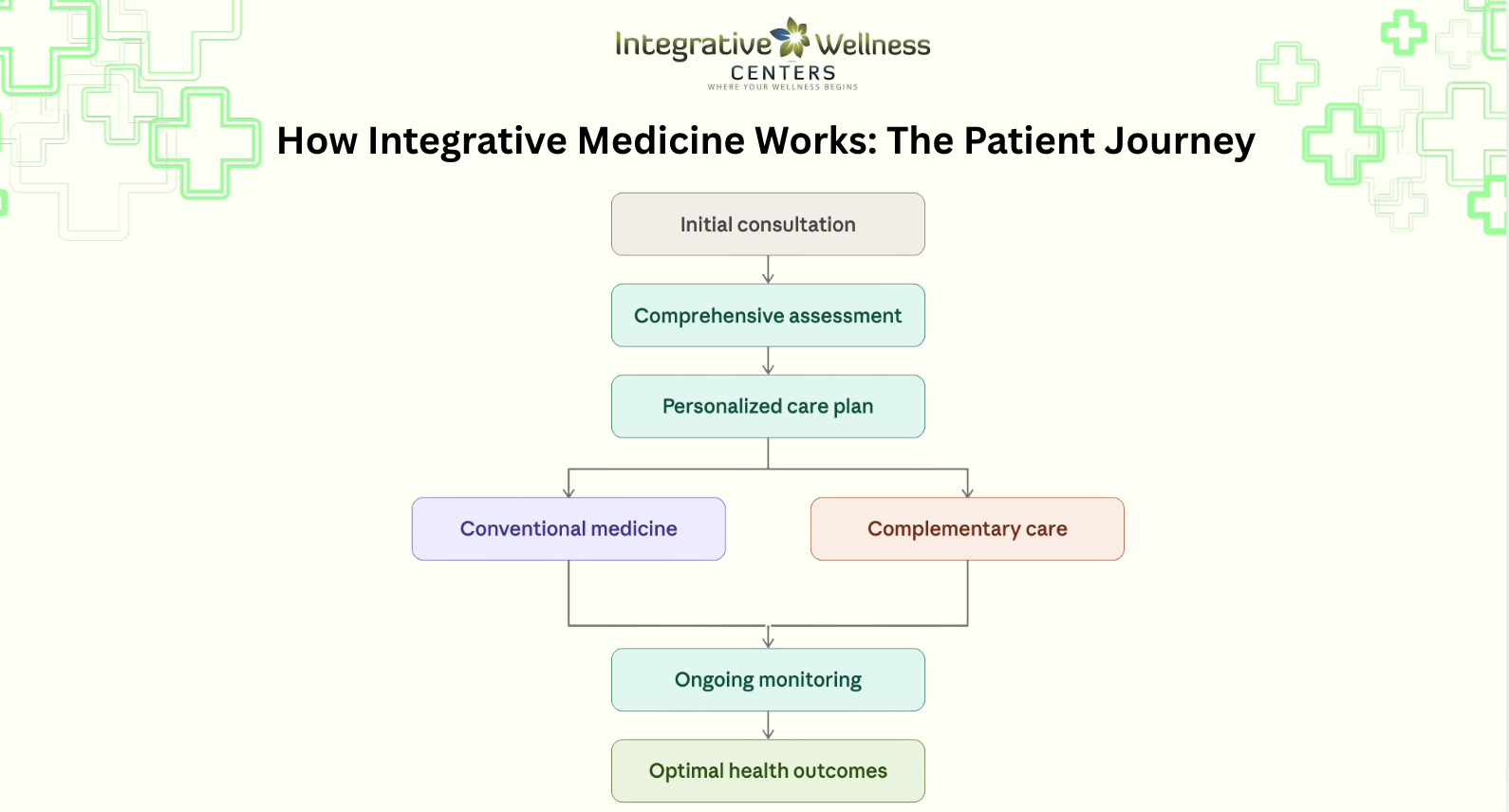
Integrative medicine is a patient-centered approach to healthcare that addresses the full range of physical, emotional, mental, social, spiritual, and environmental factors affecting a person's health. Rather than simply treating symptoms, integrative medicine doctors look for the root causes of illness and design individualized treatment plans that draw from both conventional medicine and complementary therapies supported by scientific evidence.
The field is guided by a set of core principles:
According to the National Center for Complementary and Integrative Health (NCCIH), integrative health is increasingly offered in a variety of medical settings and has a strong focus on the whole person rather than a single organ or disease.
Read more: Alternative Medicine vs Conventional Medicine vs Integrative Medicine
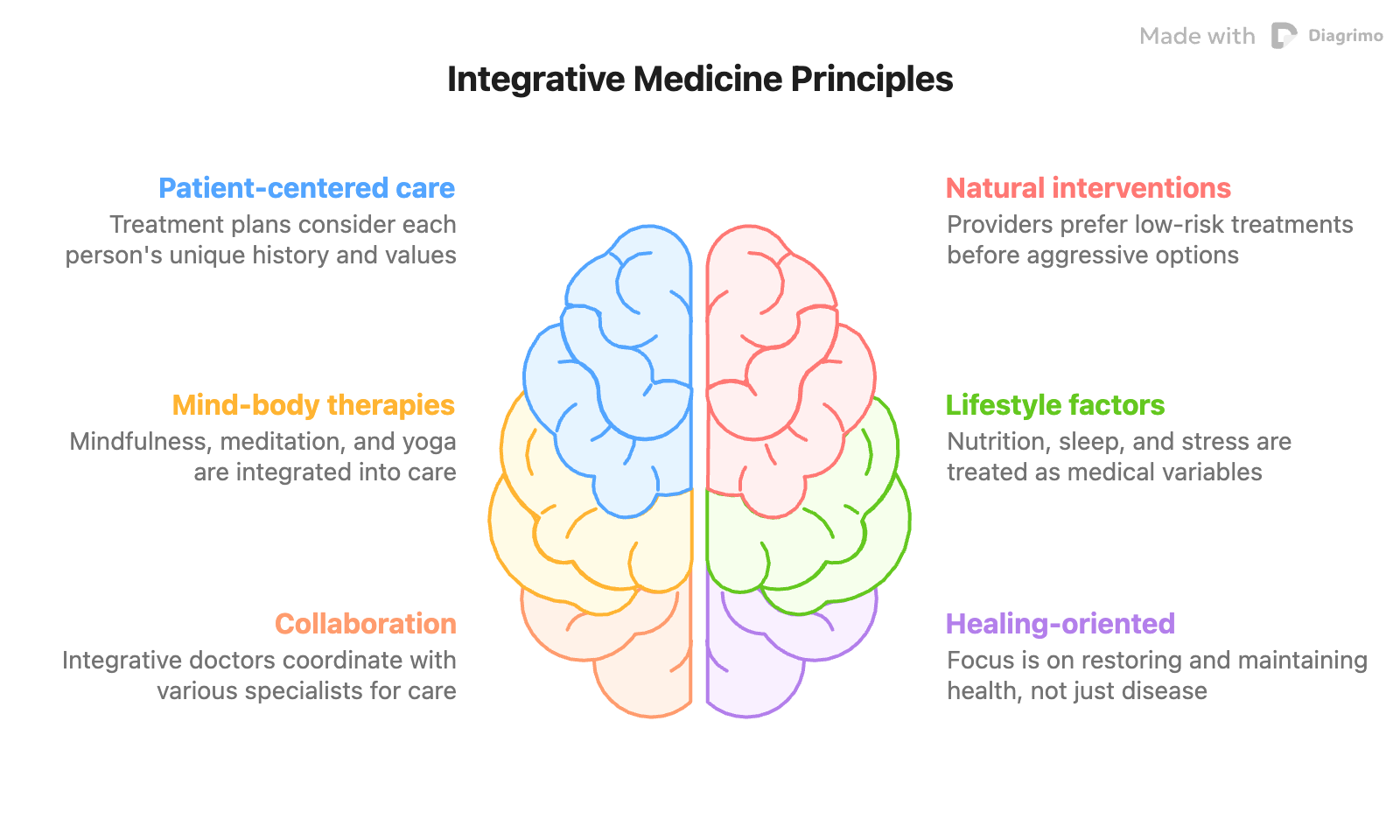
The principles of integrative medicine serve as the foundation for how practitioners approach every patient encounter. These principles distinguish integrative medicine from both conventional care and alternative medicine. Integrative medicine practitioners follow these key principles:
These principles make integrative medicine particularly effective for complex, chronic conditions where a single-system approach often falls short.
Read more What Is Functional Medicine Testing & How to Find It in Michigan
This is one of the most commonly asked questions, and the distinction is important when choosing the right type of care for your needs.
Integrative medicine combines conventional medicine with evidence-based complementary therapies. It often works within traditional hospital or clinic settings and is practiced by board-certified physicians who incorporate treatments like acupuncture, massage, mindfulness, and nutrition counseling alongside standard medical care.
Functional medicine focuses intensively on identifying the root causes of disease by looking at how genetics, environment, and lifestyle interact. It uses detailed laboratory testing and personalized protocols to address dysfunction at a biochemical and systems level.
Both approaches share a commitment to personalized, root-cause care and are far more comprehensive than a standard 15-minute office visit.
Integrative medicine doctors and practitioners come from a wide range of professional backgrounds. You do not have to see just one type of provider; in fact, integrative care often involves a coordinated team.
Common providers you may encounter at integrative medicine clinics include:
The best integrative medicine clinics coordinate care across these disciplines, ensuring that every provider is working toward the same patient goals.
Integrative medicine is particularly effective for people dealing with chronic or complex health challenges that have not responded fully to conventional treatment alone.
Conditions that integrative medicine commonly addresses include:
The key advantage is that an integrative medicine doctor does not see these conditions as isolated problems. They look at how every system in the body influences every other, which often reveals connections and solutions that conventional care alone misses.
Integrative medicine is designed for anyone who wants a more complete, personalized approach to their health. You do not need to be seriously ill to benefit.
Integrative medicine is especially valuable for:
There is no age limit. Integrative medicine serves children, adults, and older adults alike, with care plans adapted to each stage of life.
Read more Lifestyle Medicine: What It Is, How It Works, and Why It Matters
Integrative medicine draws from a wide range of evidence-based therapies. The right combination depends on your specific health goals, preferences, and medical history.
Commonly available integrative therapies include:
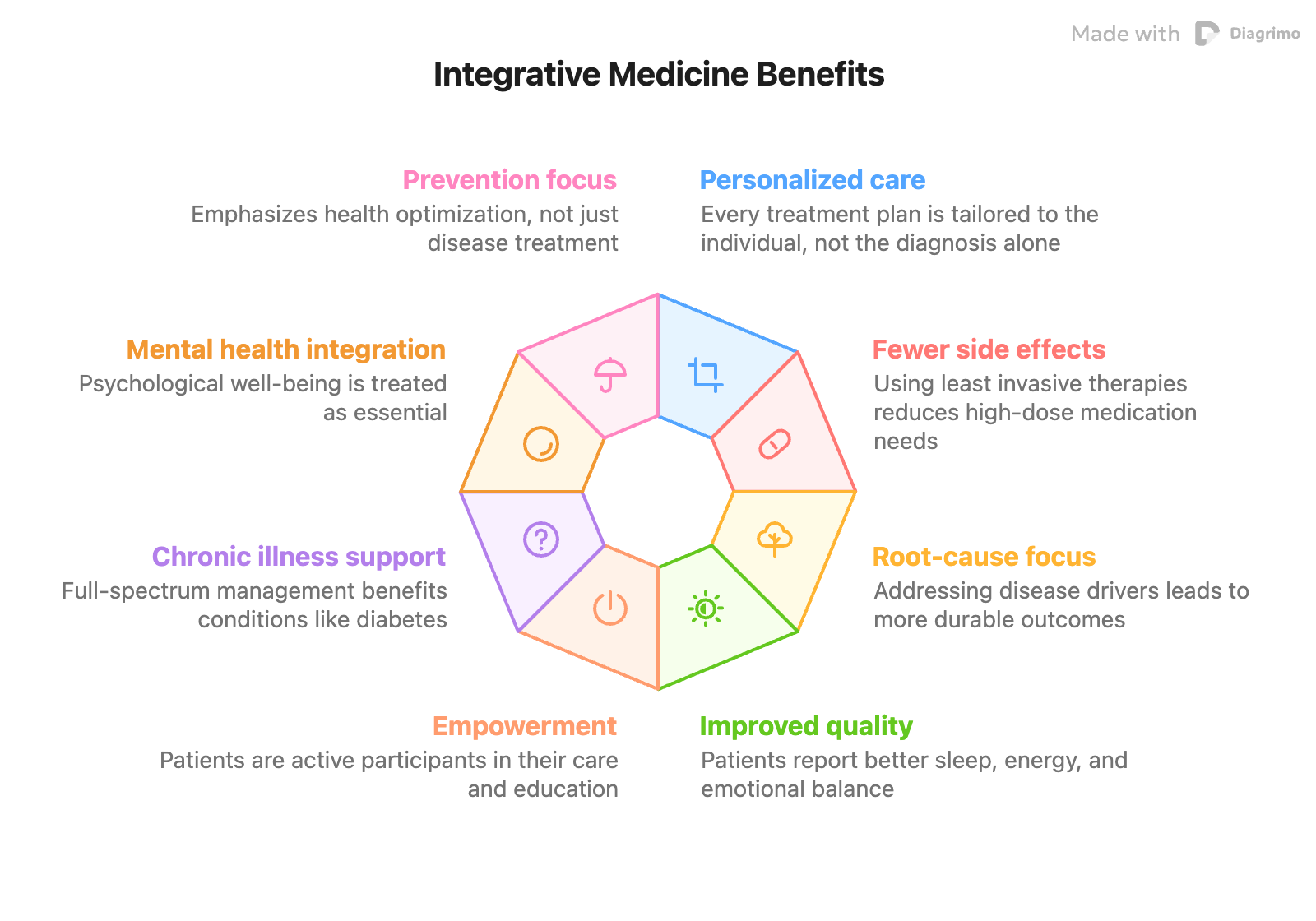
The benefits of integrative medicine extend well beyond symptom relief. Patients who work with integrative medicine doctors often report improvements across multiple dimensions of their health simultaneously. Key benefits include:
Reads more Advanced Lab Testing
Integrative medicine represents a meaningful shift in how we think about health and healing. Rather than treating the body as a collection of separate parts or managing disease in isolation, integrative medicine doctors take the time to understand you as a whole person, addressing the root causes of your health challenges and building a personalized care plan that brings together the best of conventional and evidence-based complementary medicine.
Whether you are managing a chronic condition, looking to prevent illness, or simply want to feel better and live longer, integrative medicine has something to offer. The growing network of integrative medicine clinics, including telehealth options, makes this approach more accessible than ever before.
If you are ready to take a more proactive, whole-person approach to your health, consider scheduling a consultation with a qualified integrative medicine doctor and discovering what a truly comprehensive care plan can do for your well-being.
1. Which companies offer telehealth services specializing in integrative medicine?
Several platforms now offer telehealth integrative medicine consultations. Integrative Wellness Centers is among the well-known options offering virtual visits with integrative medicine doctors. Many traditional integrative medicine clinics affiliated with academic medical centers also offer telehealth appointments for established and new patients.
2. Does my health insurance cover functional medicine consultations?
Coverage varies widely depending on your insurance plan and the specific services involved. Standard physician visits with an integrative medicine doctor who is also an MD or DO may be partially covered, especially if they accept your insurance. It is best to call your insurance provider and the clinic directly before booking.
3. What is the difference between integrative medicine and functional medicine?
Integrative medicine blends conventional medical care with evidence-based complementary therapies to treat the whole person. Functional medicine focuses specifically on identifying root causes of disease through detailed lab analysis and systems biology. Both are personalized and preventive, but functional medicine tends to be more lab-intensive and focused on biochemical root causes, while integrative medicine has a broader therapeutic toolkit.
4. What is the difference between integrative medicine and conventional medicine?
Conventional medicine primarily focuses on diagnosing and treating disease using pharmaceuticals, surgery, and standardized protocols. Integrative medicine uses those tools when appropriate but also incorporates evidence-based complementary therapies, lifestyle medicine, and a whole-person perspective. The biggest difference is that integrative medicine treats the patient, not just the diagnosis.
5. What are the 4 pillars of integrative medicine?
The four pillars most commonly cited are: nutrition and lifestyle, mind-body connection, movement and physical activity, and stress management and resilience. These pillars form the foundation of most integrative medicine treatment plans and are addressed before or alongside pharmaceutical interventions.
6. What is the key focus of integrative medicine?
The key focus is whole-person, root-cause care. Integrative medicine addresses the physical, emotional, mental, social, and spiritual dimensions of health simultaneously. Rather than simply suppressing symptoms, integrative medicine doctors work to understand and resolve the underlying drivers of illness while supporting the body's natural healing capacity.
7. What does an integrative medicine doctor do?
An integrative medicine doctor conducts a thorough intake that goes far beyond a standard physical exam. They review your medical history, lifestyle, diet, stress levels, sleep, relationships, and emotional health. Based on this comprehensive picture, they create a personalized treatment plan that may include conventional medications, nutritional protocols, mind-body therapies, supplements, and referrals to other specialists.
8. How does an integrative medicine doctor approach chronic fatigue treatment?
Chronic fatigue is evaluated through multiple lenses. An integrative medicine doctor will assess thyroid function, adrenal health, sleep quality, nutritional deficiencies, gut health, toxic load, and emotional contributors such as burnout or trauma. Treatment typically involves targeted nutritional support, sleep hygiene protocols, stress reduction strategies, and addressing any underlying infections or hormonal imbalances identified through lab work.
9. How do I book an appointment with an integrative medicine doctor online?
Most integrative medicine clinics now offer online booking through their websites. You can visit Integrative Wellness Centers to schedule a consultation.
10. Which integrative medicine clinics offer telehealth or online consultations?
Integrative Wellness Centers offer virtual consultations, schedule your consultation here!
11. Are there integrative medicine specialists for autoimmune diseases?
Yes. Autoimmune conditions are one of the most common reasons patients seek integrative care. Integrative medicine doctors use anti-inflammatory dietary protocols, gut microbiome support, stress reduction therapies, and targeted supplementation alongside conventional immunosuppressive treatments. Some integrative medicine clinics specialize specifically in autoimmune and inflammatory conditions.
12. How much does a first integrative medicine visit cost in the United States?
The initial consultation with an integrative medicine doctor typically ranges from $200 to $500 or more, depending on the provider, location, and length of the visit. Initial visits are often longer than a standard appointment, sometimes 60 to 90 minutes, to allow for a thorough intake. If the provider is an MD or DO who accepts insurance, some portion may be covered. Specialty lab work ordered during or after the visit is typically billed separately.

Take the online digestive evaluation to instantly discover what systems of your body are the cause of your health issues.
Online Digestive EvaluationTake the TestOnline Female Hormone EvaluationOnline Male Hormone Evaluation


